In Texas, your roof is your primary defense against triple-digit heat and torrential hail. While many materials struggle in this climate, standing seam metal roofing offers a premium, robust investment designed for decades of performance.
The true value of this system lies in its engineering. In the San Antonio sun, a 40-foot metal panel can expand by as much as 1/2 inch. Without proper details like a hidden fastener system and floating clips, this thermal crawl would cause a standard roof to buckle or leak.
By using these specialized details, a standing seam roof achieves a 40 to 60-year lifespan with near-zero maintenance. While the initial cost is higher than asphalt shingles, its superior storm resistance and solar reflectivity make it the most cost-effective choice over the life of your home.
What Is Standing-Seam Metal Roofing?
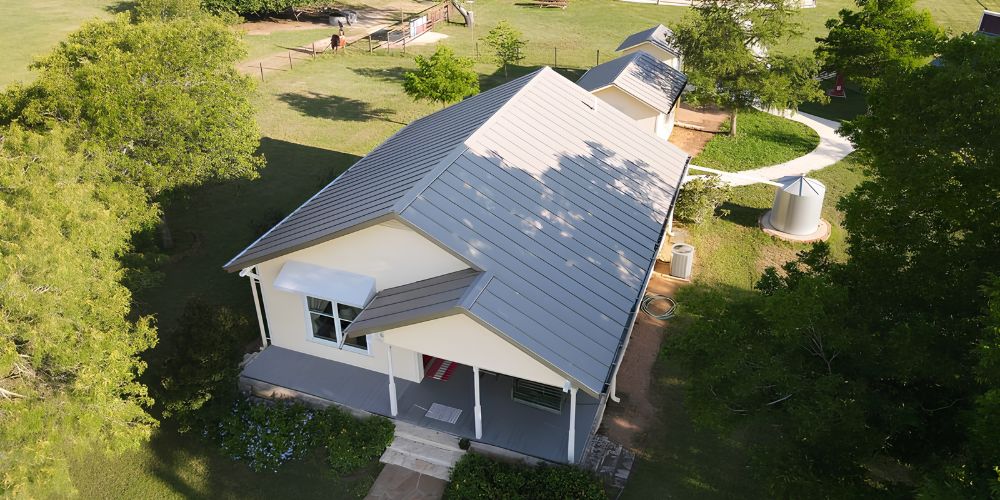
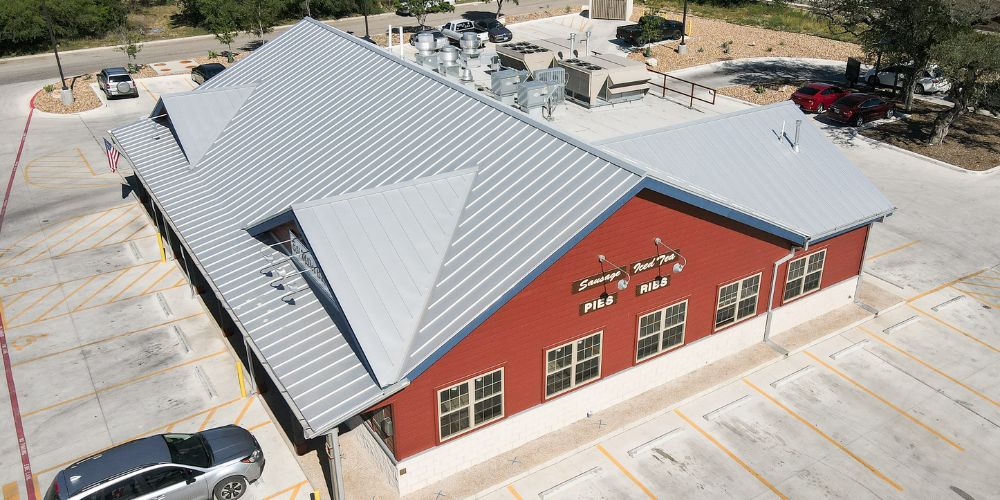
Standing-seam metal roofing is structurally defined by its distinct vertical panels and clean lines that run continuously from the eave to the ridge. The name comes from the way the panel edges are raised and joined, creating “standing seams” that rise above the flat roof surface. The key to its long-term success is that it uses a hidden fastener system. Unlike cheaper metal roofs, where screws go directly through the panel, standing seam panels use specialized clips that are entirely hidden beneath the metal. This method solidifies its position as a superior, high-performance metal roofing option.
Standing seam is not a ‘one-size-fits-all’ product; panels are categorized into specific profiles, such as snap-lock (which click together), mechanical lock (which are folded and seamed by a machine), or nail-flange systems
Standing Seam Engineering: The Details That Prevent Leaks
In the San Antonio sun, a 40-foot metal panel can expand by 1/2 inch. Without the proper engineering details, this “thermal crawl” causes panels to buckle and fasteners to fail. The Floating Clip system is the secret; these clips allow the roof to “breathe” and move freely without compromising the watertight seal. For maximum weatherproofing, Mechanical Seaming is used to create a double-lock (180-degree) seam, forming a permanent, watertight bond.
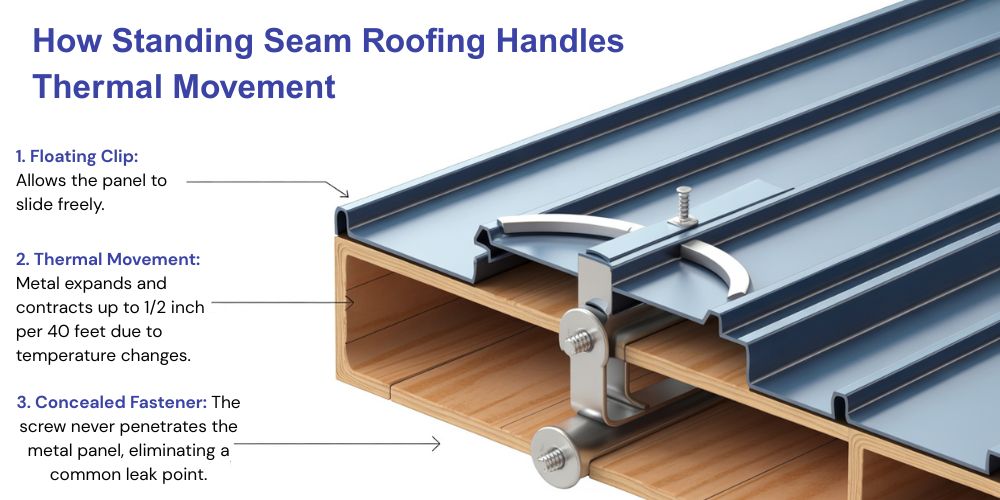
While the surface looks sleek, the true durability of a standing seam system is found in these Key Engineering Details:
- Floating Clips: Specifically designed to manage thermal expansion in 100°F+ Texas heat, preventing “metal fatigue.”
- Z-Bar Flashing: Creates a 100% watertight seal at the ridge to stop wind-driven rain from entering the peak. The design and installation of the ridge cap also play an important role in protecting the roof peak and supporting proper ventilation.
- Continuous Panels: On-site custom rolling eliminates horizontal seams, which are the #1 source of leaks in cheaper systems.
Why It Matters
The Texas climate presents significant challenges to exterior building materials. A professional-grade standing seam system delivers distinct, measurable advantages in this environment:
- Superior Solar Reflectivity: Most systems employ a high-performance finish, such as Kynar 500, which reflects a substantial portion of solar radiant heat away from the structure. This solar reflectivity significantly reduces attic temperatures and lowers air conditioning loads, establishing it as one of the most energy-efficient residential metal roofing systems available.
- Exceptional Storm and Wind Performance: The interlocking, mechanically seamed panels and heavy-gauge construction offer high wind resistance, frequently rated for uplift pressures exceeding 150 mph. Metal is inherently non-combustible and highly resistant to hail impact, providing robust protection in severe weather events.
- Maximum Longevity: When installed to manufacturer specifications by experts like Mangold Roofing, a Texas metal roofing system of this caliber consistently outlives the service life of multiple asphalt shingle installations, representing substantial long-term value.
Pros: Why Standing Seam is San Antonio’s Best Roof
- Engineered for 100°F+ Heat: Unlike shingles that bake and become brittle, standing seam uses Floating Clips to manage thermal expansion, ensuring the roof doesn’t buckle during intense Texas summers.
- Near-Zero Leak Risk: With Concealed Fasteners, there are no screw holes in your roof. This eliminates the #1 cause of leaks found in cheaper metal systems.
- 40–60 Year Lifespan: This is a “one-and-done” investment. It outlasts three generations of asphalt shingles, making it the lowest-cost option over the life of your home.
- Kynar 500® Energy Efficiency: Our finishes reflect up to 70% of solar energy, which can lower your summer cooling costs by as much as 25%.
- Solar-Ready Platform: The standing seams allow for solar panel installation without drilling holes into your roof deck, preserving your structural integrity.
Cons of Standing-Seam Metal Roofing
- Higher Initial Investment: The system’s cost is typically two to three times that of a standard asphalt shingle roof. This cost is spread out over its much longer life, but the upfront cost is higher.
- Requirement for Specialized Installation: The precision needed for panel alignment and clip attachment is very high. The roof’s performance depends entirely on the skill of the installer.
- Oil Canning Potential: This is a visual “waviness” that can appear in the flat parts of the panels.
- How we solve this: To reduce this look, we recommend using striated (ribbed) panels or heavier 24-gauge steel. These choices make the panels stiffer and help break up light reflections so the surface looks flatter.
- Impact Denting: While standing seam is very hail-resistant and will not leak, large hail can cause small cosmetic “dents”.
- How we solve this: This visual risk can be managed by choosing a matte finish, which hides small surface marks much better than shiny, high-gloss coatings.
Common Mistakes to Avoid
A long lifespan depends entirely on perfect, meticulous installation. These three mistakes will critically compromise your investment:
- Failure to Manage Thermal Movement: The most critical mistake is defeating the floating clip system. If clips are overtightened or fixed clips are used wrongly, the panel is pinned rigidly in place. This creates intense stress, leading to panel fatigue and failure when temperatures change.
- Inadequate Substrate Preparation: Metal panels conform exactly to the surface underneath. Failing to inspect or prepare the underlying deck (sheathing) transfers flaws directly to the metal, creating weak points and compromising integrity.
- Improper Sealant and Flashing Details: All roof penetrations rely on specialized flashing and sealants. Since the roof lasts 40+ years, using inferior materials or detailing these points poorly is the most common cause of leaks later in the roof’s life.
Standing Seam vs. Exposed Fastener: Which is Better for San Antonio?
When comparing standing seam with common exposed fastener systems, the core difference is the attachment method and its implications for durability:
| Feature | Standing Seam (Concealed) | Exposed Fastener (R-Panel) |
|---|---|---|
| Fastener System | Concealed clips (No holes in panels) | Screws driven through the panel |
| Leak Risk | Near-Zero | Higher(Screws back out over time) |
| Thermal Movement | Excellent (Panels slide on clips) | Poor (Metal “tears” at screw holes) |
| San Antonio Heat | Best for 100°F+ expansion | High stress on fasteners/washers |
| Lifespan | 50–70 Years | 20–30 Years |
In the South Texas sun, rubber washers on exposed fastener roofs dry out and crack within 10–15 years. Because a standard 2,000 sq. ft. roof has over 3,000 screw penetrations, each one becomes a potential leak point as the metal expands and contracts. Standing seam eliminates this risk by using a ‘floating’ clip system hidden beneath the panels.
Is Standing Seam Right for Your Home?
We advise our clients to consider the following consultative points before moving forward:
- Long-Term Residency: Does the potential for a 40+ year lifespan align with your plans for property ownership?
- Architectural Fit: Does the clean, linear aesthetic of a modern metal roof complement your home’s design?
- Energy and Sustainability Goals: Are you prioritizing energy conservation and future solar integration?
- Budgeting: Are you prepared for the higher initial capital expense in return for minimal metal roof maintenance?
- Noise Perception: Are you comfortable with the potential for increased auditory perception during heavy rain or hail events?
Standing Seam Roofing Maintenance Tips
Due to its design, a professionally installed standing seam metal roofing system requires minimal maintenance over its long life.
- Annual Visual Inspection: Inspect the roof or contract a professional to ensure the clearance of any leaves, debris, or biological growth, particularly in valleys or behind structures like chimneys.
- Sealant Verification: Critically inspect all areas requiring sealant application, specifically around penetrations such as pipe vents, flashing, and skylights. These localized areas represent the highest potential for long-term leakage.
- Surface Cleaning: If necessary, use only a mild, non-abrasive detergent and a low-pressure rinse to preserve the factory finish coating.
What makes standing seam different from other metal roofs?
The definitive difference rests exclusively on the hidden fastener system and its effective management of thermal cycling. Exposed fastener metal roofing systems are rigidly fixed, inducing stress and limiting service life. Standing seam employs mechanical clips that permit the panels to move, ensuring the integrity of the watertight system for its entire projected lifespan.
Is standing seam good for Texas heat?
Yes, it is optimal for mitigating Texas heat. Standing seam systems are specifically coated for maximum solar reflectivity, redirecting solar energy away from the structure. This, combined with the material’s ability to safely expand and contract without compromising the watertight seal, ensures excellent performance under extreme thermal conditions.
Long-term investment planning considerations
Investing in a quality standing seam metal roofing system is a commitment to a 40-year asset, which fundamentally alters the financial perspective:
- Lifecycle Cost Analysis: The initial cost is mitigated by the fact that you will finance one roof instead of two or three asphalt shingle replacements, resulting in a lower total lifecycle cost.
- Solar Integration: The system is engineered to simplify solar panel attachment. Specialized clamps secure the solar mounts directly to the standing seams without penetrating the panels, preserving the roof’s integrity and warranty.
Conclusion
Choosing a standing seam metal roof is an investment in your home’s long-term protection. As we’ve explored, the pros and cons show that while the upfront cost is higher, the 50- to 70-year lifespan and energy savings make it the most cost-effective choice for the San Antonio heat.
To ensure your roof performs as expected, the focus must be on finding a contractor with proven expertise in thermal management and precision installation. At Mangold Roofing, we don’t just “install” roofs; we engineer them to handle the specific weather challenges of South Texas. If you are looking for a roof that balances modern aesthetics with decades of defense, we are here to help you get it right.
FAQ
1. What are the disadvantages of a standing seam metal roof?
The primary disadvantages are the higher upfront cost and the requirement for specialized installation. There is also a visual risk called oil canning (minor waviness), though this can be managed by using 24-gauge steel or striated panels. While noise from rain is a common concern, it is effectively muffled by high-quality underlayment and standard attic insulation.
2. Is a standing seam metal roof worth the cost in San Antonio?
Yes. While it costs more initially than shingles, it is a “one-and-done” investment with a 50- to 70-year lifespan. In the Texas heat, the solar-reflective finish can lower cooling costs by up to 25%, helping the roof pay for itself over time through energy savings and zero maintenance.
3. What is the life expectancy of a standing-seam system?
A professionally installed system typically lasts 40 to 60 years, with many lasting up to 70 years, depending on the material and environment. In the South Texas climate, longevity depends on the use of floating clips that allow the metal to expand and contract without damaging the fasteners.
4. How does standing seam handle the San Antonio heat?
Standing seam is specifically engineered for high temperatures. By using concealed floating clips, the panels can slide up to 1/2 inch as they heat up. This prevents the metal from buckling or “tearing” at the screw holes, which is the most common cause of failure in cheaper metal roofs.