Ask ten homeowners what modified bitumen roofing is, and nine of them will shrug. It’s one of those terms that shows up on contractor estimates and inspection reports, and most people just nod along without really knowing what it means.
So let’s actually talk about it. What it is, where it works, when it fails, and whether it’s worth putting in your home.
What Is Modified Bitumen Roofing?
It’s asphalt. But not plain asphalt. The “modified” part means they’ve mixed in rubber or plastic compounds, usually something called SBS or APP, which makes the material behave differently than standard asphalt would on its own.
What you end up with is a flexible, layered sheet membrane. It goes down in multiple layers over the roof deck, which is part of why it works well. No single layer has to do everything. The layers work together.
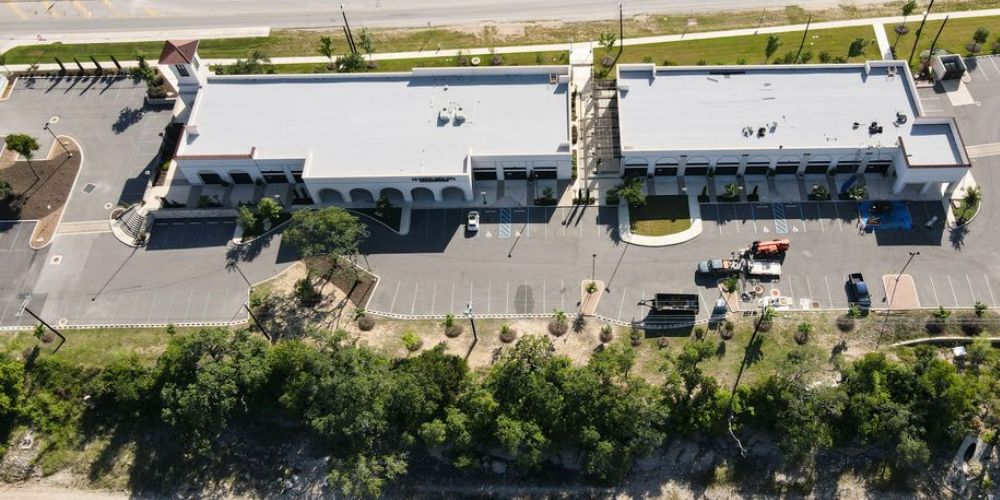
It’s used almost exclusively on flat roofs or roofs with very low pitch. You’ll see it on homes, garages, commercial buildings, and home additions. Anywhere a traditional shingle roof wouldn’t make much sense.
Installation varies. Some crews use a torch to bond the layers down, which is the torch-down method most people have heard of.
Others use adhesives or self-adhering sheets that don’t require heat. The method matters less than the crew doing it, honestly. Bad installation causes problems, no matter which approach they use.
How Modified Bitumen Roofing Systems Work?
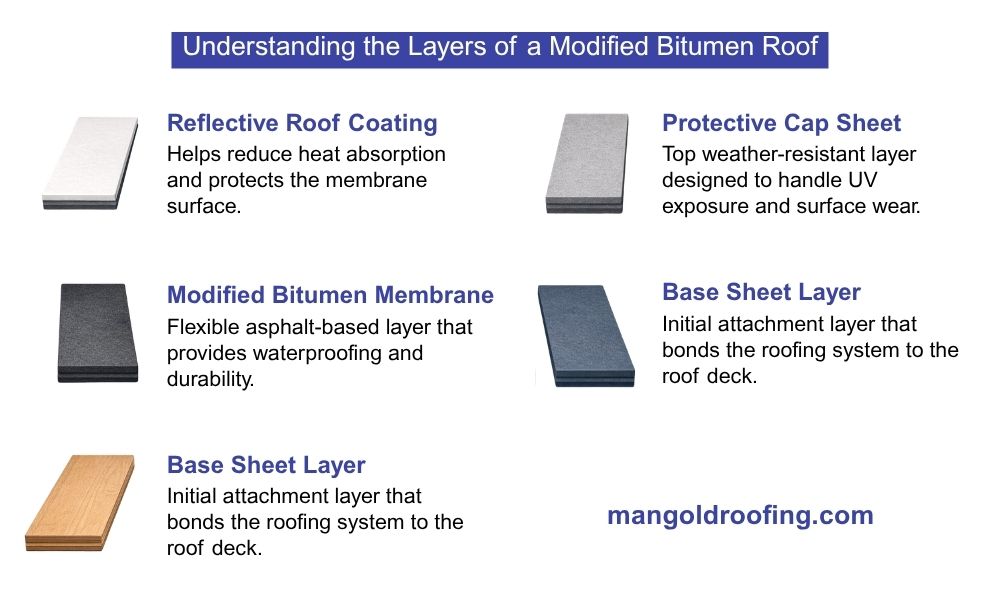
Modified bitumen roofing works as a layered waterproofing system rather than a single surface material. Each layer plays a specific role in protecting the building.
The process usually starts with a base sheet that attaches directly to the roof deck. This layer creates the foundation for the rest of the system and helps improve adhesion and stability.
Above that sits the reinforced bitumen membrane. This is the main waterproofing layer. It contains fiberglass or polyester reinforcement that adds strength and flexibility, allowing the roof to handle temperature changes and building movement without tearing.
The top layer is typically a protective cap sheet. This surface shields the membrane from UV exposure, weather impact, and foot traffic. Some cap sheets include reflective granules or coatings that help reduce heat absorption.
When installed correctly, these layers work together to create a durable, watertight barrier that performs well on flat and low-slope roofs.
Best Uses for Modified Bitumen Roofing
Modified bitumen roofing works as a layered membrane system designed to create a durable waterproof barrier over flat and low-slope roofs. Instead of relying on individual shingles, this system uses continuous sheets of asphalt-based material that are installed in overlapping layers.
The process usually starts with a base sheet that attaches directly to the roof deck. On top of that, reinforced modified bitumen membranes are applied to add strength and flexibility. A protective cap sheet or coating is then installed as the top layer to help resist UV exposure, moisture, and everyday wear.
Because these layers work together, the system can handle movement caused by temperature changes while still maintaining strong waterproof performance. This is one reason modified bitumen roofing remains a common flat roof membrane solution for both residential additions and commercial buildings.
Pros of Modified Bitumen Roofing
It holds up. That’s the main thing. The layered construction means water has to work through more than one barrier to become your problem. For flat roofs that sit under standing water after every rain, that matters.
It flexes. Buildings move.
Temperature changes make materials expand and contract constantly. Modified bitumen, particularly SBS-modified versions, handles that movement without cracking the way a more rigid material would. That flexibility is part of why it lasts as long as it does.
Repairs are manageable when something does go wrong in one spot. A qualified roofer can usually address a localized issue without tearing the whole thing off.
Reflective coatings are an option, too. If you want to reduce heat absorption, especially in Texas, there are modified bitumen products designed specifically for that.
Cons of Modified Bitumen Roofing
Lifespan is the honest drawback. Against metal roofing or tile, it simply doesn’t last as long. If you’re purely optimizing for longevity, other materials will outperform it.
Torch-down installation carries real risk when the crew isn’t experienced. An open flame near a building requires someone who’s done it many times. It’s not the place for someone learning on the job.
UV exposure wears it down faster than people expect, especially without protective coatings. The Texas sun does a number on exposed membranes over time.
Seams are where failures tend to start. Where two sheets overlap and bond together, separation can happen if the original installation wasn’t done right. That’s usually where water finds its way in first.
And it’s simply not designed for steep roofs. If someone is quoting you modified bitumen for a roof with significant pitch, get a second opinion.
How Long Does a Modified Bitumen Roof Last?
A simple comparison:
| Material | Typical Lifespan |
| Modified Bitumen | 15–25 years |
| Asphalt Shingles | 15–30 years |
| Metal Roofing | 40–70 years |
Where yours lands in that window depends on installation quality, how Texas weather affects roof performance, and whether it’s been looked at over the years or completely ignored. Those factors move the number more than most people realize.
Maintenance Considerations
Modified bitumen roofing is best suited for structures with flat or low-slope roof designs where traditional shingle systems may not perform effectively. It is frequently used on commercial buildings, garages, home extensions, and sections of residential properties that require a durable membrane roofing system.
Buildings with rooftop equipment such as HVAC units also benefit from modified bitumen roofs because the layered surface can handle moderate foot traffic during inspections and maintenance. In areas where drainage is slower and water may sit temporarily after heavy rain, this roofing system provides added protection through its multi-layer construction.
For property owners comparing flat roofing options, modified bitumen often becomes a practical choice when balancing cost, durability, and repair accessibility.
Signs a Modified Bitumen Roof May Need Replacement
If a modified bitumen roof begins to fail, warning signs usually appear on the surface or inside the building. Recognizing these early can help prevent widespread membrane damage and costly interior repairs.
- Visible cracks forming across the modified bitumen membrane surface. The material has lost its ability to flex with temperature changes. It’s breaking now instead of bending.
- Bubbles or raised sections developing on the roof. Moisture is trapped beneath the membrane layers. Those bubbles don’t heal. Over time, they weaken and rupture.
- Water sitting on the flat roof for more than two days after rain. Drainage may be compromised, and standing water gradually finds weak seams or worn areas.
- Stains or damp spots appearing on interior ceilings. At this stage, the waterproof barrier has already been breached somewhere in the modified bitumen roof system.
- Flashing pulling away from edges, penetrations, or rooftop equipment. Separation at these transition points is often where the next leak begins.
If multiple warning signs appear especially on an older roof a professional inspection can help determine whether targeted repairs are still practical or if replacement is the smarter long-term decision.
When Should You Replace a Modified Bitumen Roof?
When repairs stop keeping up with the problems. That’s the real answer.
The average lifespan is somewhere between 15 and 25 years. But that range is wide for a reason. A roof that was installed carefully and inspected every few years might push past 20. One that was rushed through installation and ignored afterwards might start showing serious issues at 12 or 13.
The signs that tell you it’s time: leaks that keep coming back in the same spots even after being patched, a membrane that’s visibly cracking or splitting, or sections that are bubbling up from the surface. If you’re seeing a combination of those things on a roof that’s already on the older side, replacement is probably the smarter financial decision at that point.
Wrapping Up
Modified bitumen is a practical, proven material for flat and low-slope roofs. It’s not glamorous, but it works when it’s installed right and checked occasionally. Most of the failures people experience with it trace back to either poor installation or years of zero maintenance.
If your roof is aging, or something about it has been nagging at you, Mangold Roofing can take a look and give you a straight answer on where things actually stand. No pressure, just an honest assessment of what your roof needs right now.