Most homeowners never think about roof flashing until a leak appears inside the house. By the time water is dripping from the ceiling, flashing has already failed at a critical point on the roof.
While shingles and gutters get most of the attention, roof flashing plays a key role in protecting vulnerable joints and transitions where water naturally collects. When flashing is intact, it directs water safely away. When it fails, leaks can develop even on newer roofs.
In Texas, roof flashing is under constant pressure. Extreme heat causes materials to expand, sudden storms drive water into roof joints, and seasonal temperature changes accelerate wear. These conditions make properly installed and maintained flashing essential for long-term leak protection.
What Is Roof Flashing?
Roof flashing is thin metal installed at the most vulnerable areas of a roof, including joints where two surfaces meet and penetrations such as chimneys, skylights, and vent pipes. The metal is typically aluminum, galvanized steel, or copper, and its shape depends on the location and function. Regardless of the material, the purpose of roof flashing is the same: to direct water away from seams and prevent moisture from entering the structure.
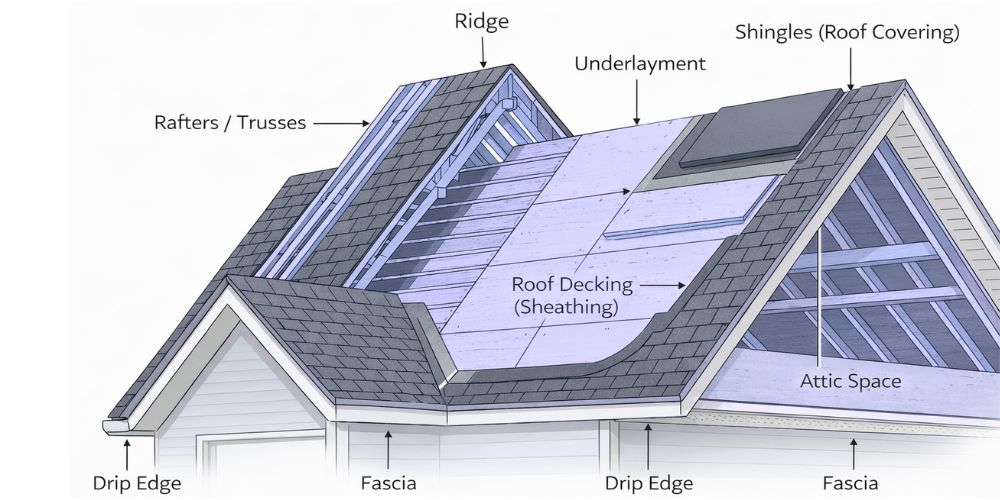
Shingles protect broad, open sections of a roof, but they cannot fully seal transitions or vertical intersections. At these connection points, flashing on a roof creates a waterproof barrier that channels water safely down and away from critical joints.
When flashing fails or is improperly installed, water can penetrate beneath roofing materials and into the decking, insulation, and interior walls. Over time, this can lead to structural damage, mold growth, and costly repairs that far exceed the investment in properly installed flashing.
Types of Roof Flashing Used on Homes
There are several roof flashing types used on residential properties, and each one protects a specific area where leaks are most likely to occur. Understanding these flashing types helps homeowners recognize how water is directed away from vulnerable roof joints.
Step flashing is installed where a sloped roof meets a vertical wall, such as along dormers or home additions. It is layered with shingles so that each piece overlaps the one below, creating a continuous path for water to flow downward without pooling. When step flashing fails, water often appears on interior walls near the affected area.
Chimney flashing protects the joint where the chimney penetrates the roof surface. Because chimneys expand and contract with temperature changes, this area is especially vulnerable. Proper chimney flashing includes base flashing at the bottom and counterflashing secured into the mortar joints. If either component fails, a roof leak around a chimney can develop quickly.
Valley flashing lines the channel where two roof slopes meet. This area handles a high volume of runoff during heavy rain, making it one of the most critical flashing locations. Valley flashing ensures water flows directly toward the gutters rather than seeping beneath shingles.
Drip edge flashing runs along the perimeter edges of the roof. It prevents water from curling back underneath the roofing material and damaging the underlying wood decking over time.
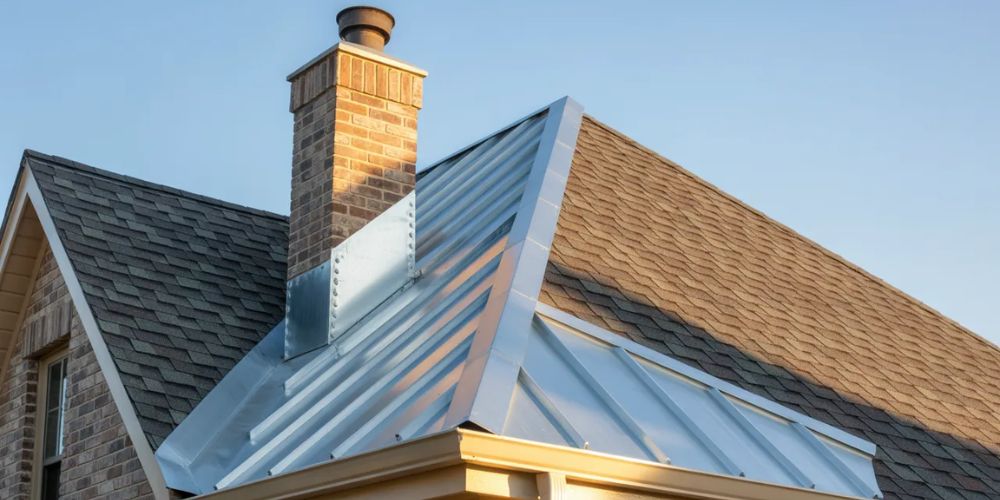
Metal roof flashing is specifically designed for metal roofing systems, where expansion and contraction are more pronounced. Flashing for metal roofs must allow controlled movement while maintaining a watertight seal at seams, transitions, and penetrations.
Why Roof Flashing Fails
Roof flashing fails when constant environmental stress weakens the seal between the metal and the surrounding roofing materials. One of the primary causes is repeated expansion and contraction. As temperatures rise and fall, metal naturally moves. Over time, this movement can loosen fasteners, crack sealant, and create small gaps where water can enter.
Improper installation is another leading cause of flashing problems. If pieces are not correctly overlapped, secured, or sealed, water can bypass the flashing system entirely. These issues may not appear immediately. A roof can look intact for a year or two before hidden flaws begin to show as interior leaks.
Corrosion also contributes to failure, especially when lower-grade metals are used or when protective coatings wear down. Rust weakens the metal and reduces its ability to maintain a watertight seal.
Storm damage is another common trigger. Strong winds can bend or lift flashing, and heavy rain can exploit even minor weaknesses around chimneys, valleys, and wall intersections. After severe weather, inspecting flashing is just as important as checking shingles.
Roof Flashing for Metal Roofing Systems
Flashing plays an even more critical role in metal roofing systems because metal panels expand and contract significantly with temperature changes. Unlike asphalt shingles, metal moves more visibly over time. If flashing is not designed to accommodate that movement, fasteners can loosen, seams can separate, and leaks can develop around penetrations.
Standing seam metal roofing requires precision flashing at panel transitions, ridges, and penetrations to maintain a watertight seal without restricting natural movement. Exposed fastener systems also rely on properly integrated flashing to prevent water intrusion at panel overlaps and roof-to-wall connections.
Because metal roof flashing must balance flexibility with durability, correct material selection and installation technique are essential for long-term performance.
Signs Your Roof Flashing Needs Repair
One of the earliest signs of flashing failure is water staining on ceilings or interior walls, particularly near chimneys, skylights, or roof-to-wall intersections. In many cases, what appears to be a shingle problem is actually a roof leak around a chimney or another penetration where flashing has deteriorated.
From the exterior, warning signs may include:
- Rust or corrosion on visible metal flashing
- Gaps where flashing has separated from the roof surface
- Cracked, brittle, or missing sealant
- Lifted edges around chimneys or wall junctions
- Loose or missing fasteners
Addressing roof flashing repair early can prevent minor gaps from turning into structural damage. When moisture is allowed to sit beneath roofing materials, it can compromise decking, insulation, and interior finishes, significantly increasing repair costs.
Why Professional Installation Matters
Roof flashing must be cut, shaped, and integrated with surrounding roofing materials precisely. Every chimney, wall intersection, and valley has unique dimensions and angles. Even small alignment errors can create entry points for water.
Many persistent roof leaks trace back to improper flashing installation rather than failed shingles or decking. Incorrect overlaps, poorly secured counterflashing, or inadequate sealing can allow water intrusion long before the problem becomes visible inside the home.
When flashing is properly installed, it works quietly in the background for years, directing water away from vulnerable joints and maintaining the roof’s structural integrity. Precision during installation is what determines whether flashing performs as intended over the long term.
Precision during installation is what determines whether flashing performs as intended over the long term, which is why homeowners trust Mangold Roofing to engineer systems that handle the specific weather challenges of South Texas.
Wrapping Up…
Roof flashing protects the most vulnerable areas of a roof where water is most likely to enter. While shingles cover open surfaces, flashing seals joints, transitions, and penetrations that would otherwise become entry points for moisture.
Because flashing endures constant expansion, contraction, and weather exposure, proper material selection and precise installation are essential. When flashing is maintained and repaired early, it can prevent costly structural damage and extend the life of the entire roofing system.
Regular inspections help identify small issues before they develop into significant leaks.