Have you ever, as a child, made a simple house? You probably made a gable roof. It has that old-fashioned triangular roofing–two sloping sides, which meet in a summit in the middle of the roof.
The gable roofs are extremely celebrated in American homes, as they are excellent in shedding rain and snow, cost-effective to construct, and can be applied in most climates.
This is a guide to gable roofs, including their various forms, the method of their construction and design, their advantages and disadvantages, and their comparison with hip roofs.
What Is a Gable Roof?
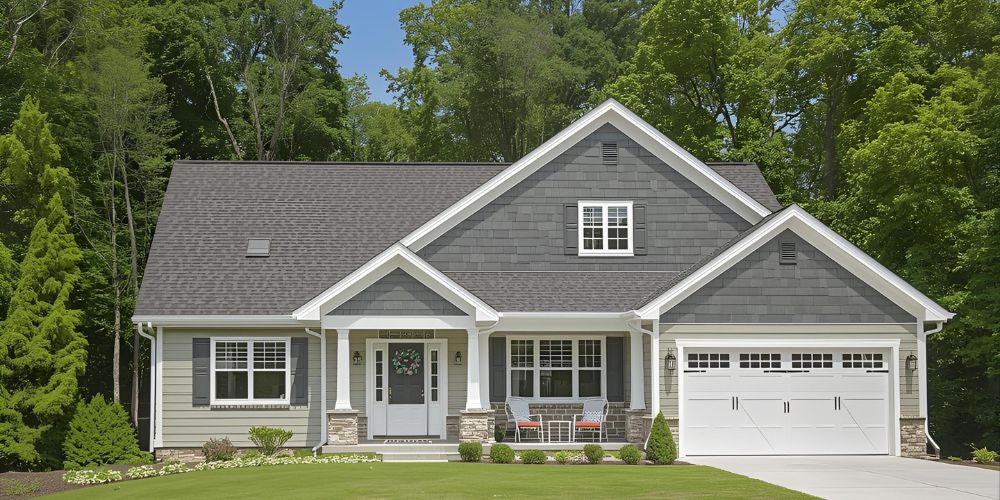
A gable-tiled roof possesses two slouched sides that converge at a ridge in the middle, forming that recognisable triangle form at each end. The triangle wall that you see is called the gable end or gable end wall; it is the straight upward side that serves to enclose the space beneath the peaked roof.
It is not only the looks of this design. The gable end is, in fact, useful in supporting the roof structure and also in giving your home its typical shape. All sorts of buildings, tiny cottages, big red barns, have gable roofs.
It is designed only and, therefore, is less costly and easier to construct. It also works quite well in ensuring that the rain and snow do not accumulate and become a nuisance.
Types of Gable Roofs
Although all gable roofs have that simple triangular form, they are available in a variety of options.
Front Gable Roof
The triangular gable end has a front gable roof and is facing the street. This is common to colonial houses and Cape Cod cottages.
Cross Gable Roof
The result of two or more gable sections at right angles is a cross gable roof. It may appear like an L or T shape.
Dutch Gable Roof
A Dutch gable is a combination of a gable roof and a hip roof. All sides are sloped in the lower part, and there is a little gable bit at the very top. This provides additional attic space and ventilation as well as makes the roof more resistant to wind.
Box Gable Roof
In a box gable roof, the gable ends are enclosed rather than left open, giving them a cleaner, more polished look.
Gable Roof Design and Structure
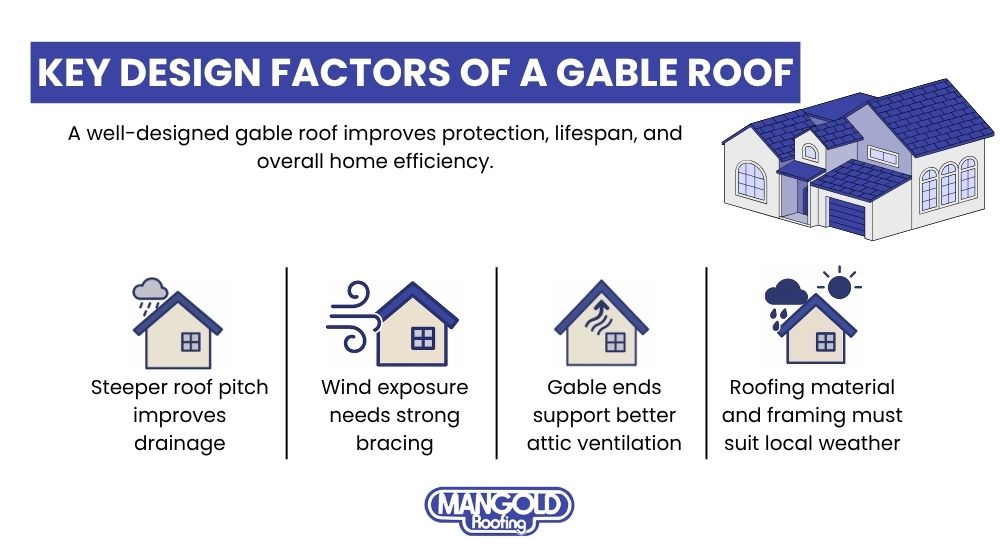
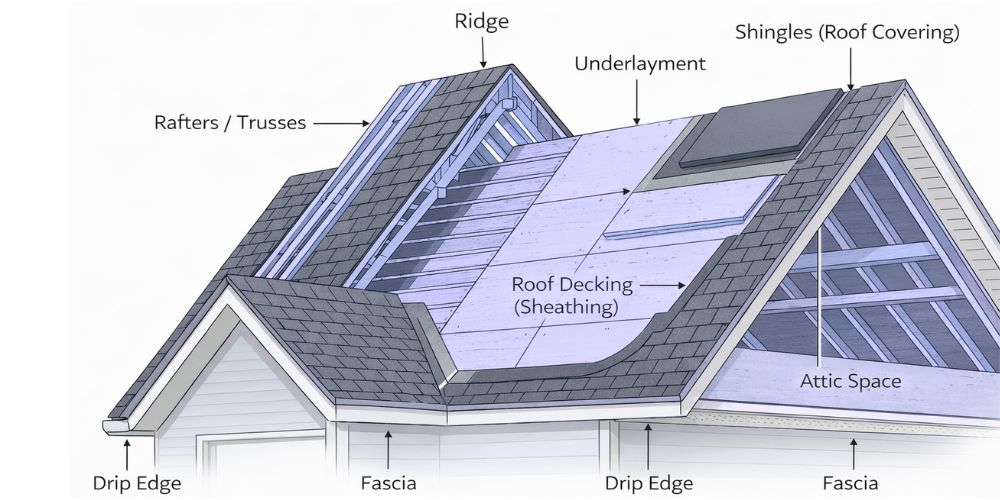
At the very top, you have the ridge board—the horizontal beam running along the peak where both sides meet. Rafters then run down upon each side against the walls.
These form the angled surfaces that make the roof look like that. Those end triangular spaces are filled in by the gable end walls, which assist in supporting the structure.
The angle and length required are similar on both sides to have a balanced weight and to allow the water to be drained well. The steepness (which is known as the pitch) is also important. The steeper roofs are quicker to shed the water and snow.
Advantages of Gable Roofs
There are plenty of good reasons why gable roofs are so popular:
- Excellent water and snow drainage: Those sloped sides naturally push water and snow right off the roof, which means fewer leaks and a longer-lasting roof.
- Great attic space: That peaked design creates a roomy attic perfect for storage or even extra living space.
- Affordable to build: The simple design needs fewer materials and less complicated work, meaning lower costs for both materials and labor.
- Versatile style: Whether your home is traditional or modern, a gable roof probably works. They complement just about any exterior style you can think of.
Disadvantages of Gable Roofs
Nothing’s perfect, and gable roofs do have some downsides:
- Vulnerable in high winds: Those big, flat gable ends can catch wind like a sail. In really strong storms, this can lift or damage the roof. If you live somewhere windy, you’ll need extra reinforcement.
- Need regular maintenance: The spots where different roof sections meet can collect debris and develop leaks if the flashing wears out or wasn’t installed correctly.
Gable Roof vs Hip Roof
When choosing a roof style, you’ll probably compare gable roofs to hip roofs, as explained in our Gable Roof vs Hip Roof guide. Here’s how they differ:
| Feature | Gable Roof | Hip Roof |
| Design | Two slopes with triangle ends | Four slopes on all sides |
| Wind Resistance | Less stable in high winds | Much better in storms |
| Cost | Less expensive | Costs more |
| Attic Space | Lots of room | Less space |
If you want to save money, maximize attic space, and don’t live in a hurricane zone, a gable roof is probably your best bet. But if you’re in an area with severe weather, a hip roof might be worth the extra investment.
How to Build a Gable Roof
Building a roof isn’t a DIY project for most people, but here are the basic steps:
- Measure and plan: Figure out how wide your house is and what pitch you want. These numbers tell you how long your rafters need to be.
- Install the ridge board: This goes at the very top, running from one end to the other. It needs to be perfectly level.
- Attach the rafters: Cut rafters to the right length and angle, then attach them to the ridge board at the top and walls at the bottom.
- Add sheathing and roofing: Cover everything with plywood, then add underlayment, flashing, and finally your shingles.
Safety Note: Working on a roof is dangerous. Unless you’re a trained professional, hire someone who knows what they’re doing and can ensure everything meets building codes.
Gable Roof Construction Details
Most builders use pre-made trusses instead of cutting rafters on-site. Trusses are factory-built frameworks that are incredibly strong and make construction faster. Common designs include king post and queen post trusses, which work great for wider houses.
Asphalt shingles are the most common roofing material because they’re affordable and easy to install. Metal roofing and tile are also options, including metal roofing and tile roofing, depending on your design preferences.
The angle matters more than you think. Steeper pitches are better for snowy areas, while moderate pitches work fine for most places, similar to designs used in slate roofing for increased durability.
Conclusion
Gable roofs have not died out in vain– they work. They are easy, convenient, and beautiful.
Surely they may be subject to the strong winds, but when done right, they will prove economically over the decades. A gable roof is a good option whether you are creating one or a replacement of an old one.
In case you need professional assistance in the state of Texas, contact Mangold Roofing. We will ensure that your roof is constructed properly and constructed to be long-lasting.