A key part of choosing a new metal roof is understanding the gauge, which is simply the measurement used to indicate the thickness of the metal panels. This measurement is critical because a lower gauge number actually signifies a thicker, more durable sheet of metal. Choosing the correct gauge directly impacts your roof’s protection against weather elements and strong winds, thereby preventing long-term issues such as dents or bending.
This guide makes the gauge system easy to understand by comparing 24-gauge, 26-gauge, and 29-gauge options. We will show you the best value option for residential homes and explain how your choice changes based on the roof style (like standing seam) and the material (like steel or aluminum).
What Is Metal Roof Gauge?
As we said earlier, the “gauge” of a roof is the system that’s used to measure the thickness of the metal sheet that goes on your roof.
Here’s the slightly confusing part, though: a lower gauge number is actually more durable than a higher gauge number. This means that a lower gauge number, such as 24-gauge, is actually thicker and stronger than a higher gauge number, like 29-gauge.
As you’ll see, the lower gauge selections often carry a higher price tag since they’re more durable.
Why Metal Roof Thickness Matters for Homes in San Antonio
For homeowners in San Antonio, the gauge of your roof will greatly impact its protection against the elements and harsh weather conditions. Again, remember that a lower gauge number signifies a thicker sheet of metal.
In other words, the thicker gauges help your roof handle hail, heat, and strong winds more effectively. You’ll have no worries about dents, lifting, or bending from hailstorms and high winds.
Metal Roof Gauge Thickness Chart
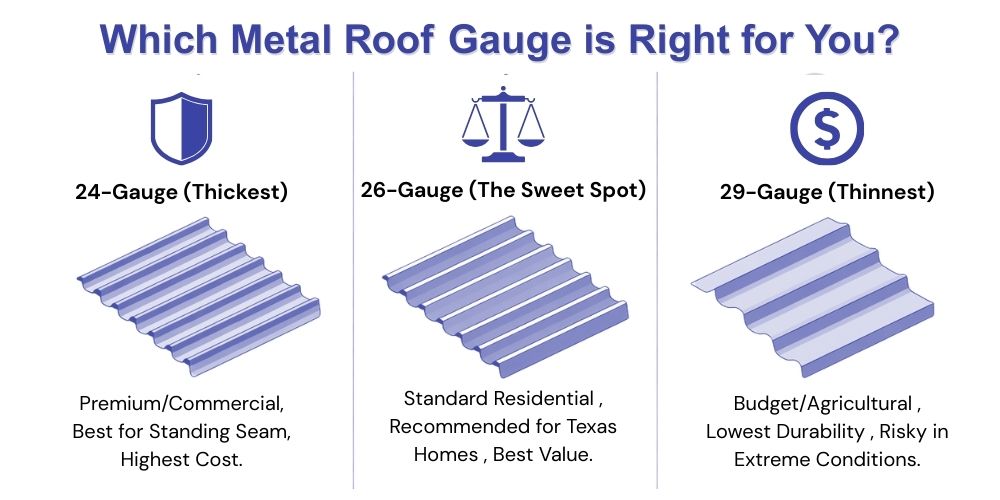
As you can see, we’ve broken down how this measuring system works, along with the features that you can count on for each gauge number.
| Gauge Number | Relative Thickness | Typical Use | Key Features |
| 24-Gauge | Thickest | Premium/Commercial | Highest material strength, best resistance to dents and wind damage, longest lifespan, superior rigidity, |
| 26-Gauge | Medium | Standard Residential | Good strength and dent resistance, solid performance in most weather, widely available |
| 29-Gauge | Thinnest | Budget/Agricultural | Lowest material cost, lightest weight, highest flexibility |
If you’re comparing durability and performance, you may also want to review how metal roofs differ from shingles.
Best Gauge for Metal Roof in Texas Homes
To choose the best metal roof gauge for your home, you’ll need to find the best durability that fits your budget. Given the severity of the weather, particularly intense hail and high-wind events, we generally recommend a 26-gauge roof for most standard residential needs.
In fact, the 26-gauge offers excellent strength and rigidity that stands up against dents and gusts. While 29-gauge is cheaper, it can still be risky in extreme conditions. However, the 26-gauge provides optimal protection against the elements without the hefty price tag of a 24-gauge, thus making it the happy medium for most homeowners.
Types of Metal Roofing and How Gauge Affects Them
Along with the gauge, we also have to look at the two standard types of metal roofing for residential use. These include standing seam and exposed fastener.
While the gauge is still important in both types, it’ll affect each in different ways. For example, in a standing seam, a thicker gauge is typically recommended. The main rationale behind this is to reduce oil-canning, which is a ripple effect or waviness in a flat panel. The thicker gauge will also ensure the panels stay flat and straight with little to no maintenance.
For exposed fastener panels, on the other hand, the thicker gauge works best to protect the roof from puncturing and denting, especially near the fasteners. Regardless of what type of roofing is used, a lower gauge number will always result in a stronger, quieter, and more durable roof.
Metal Roofing Materials & Their Ideal Gauge
Likewise, when you’re looking at the standard types and gauge measurements of metal roofs, you also have to consider the materials, particularly steel (and its variations) and aluminum. Steel and aluminum each respond differently to heat, moisture, and installation methods.
Steel
Steel is the go-to standard of metal roofing materials. More specifically, you can also choose from galvanized steel, which contains a zinc coating. Or you can opt for galvalume steel, which has been treated with aluminum, zinc, and silicone as a protective shield.
Your ideal gauge for a steel roof falls between 24 and 26, which offers optimal protection at a more affordable price.
Aluminum
Aluminum, in contrast to steel, is a more lightweight and thinner material than steel. However, it has proven to be the ideal metal roofing material for coastal areas since it’s not as prone to rusting as steel.
A 22 to 24-gauge gives you options for aluminum roofs that are durable and budget-friendly.
Pros and Cons of Choosing a Thicker vs Thinner Gauge
| Gauge Number | Pros | Cons |
| 24-Gauge | Best resistance against impact damage and windsBest rigidityLongest lifespan potential | Highest costHeaviest weightHardest to work with |
| 26-Gauge | Best valueGood durabilityWorkable | Moderate dent resistanceSusceptible to oil-canning |
| 29-Gauge | Most AffordableLightest weightBest for budget projects | Lowest durabilityHighest damage riskLeast rigid |
Homeowners comparing panels may also want to review the common metal roof panel options available today.
Cost Differences Based on Metal Roof Gauge
As noted, the price of your metal roof is directly tied to its thickness, type, and material. Since thicker gauges use more raw materials, they will naturally come with a higher cost. Homeowners should expect to pay a noticeable premium, sometimes 10% to 25% more, to jump from a standard 26-gauge to a 24-gauge.
While you can opt for a 29-gauge roof for the sake of saving money, you won’t get the same quality as a lower gauge. Although you’re paying more for thicker metal sheets, you’ll save on the long-term cost of maintenance and repairs, and of course, replacement. While thinner gauges cost less upfront, thicker metal helps reduce long-term repairs and adds to the roof’s lifespan.
Plus, you can expect a higher return on your investment if you decide to sell your home.
Why Hire a Professional Metal Roofing Contractor in San Antonio
Installing a roof is not something that we would recommend DIYing. It’s a precise job that requires specialized skills and equipment, especially in the case of working with metal sheets. A professional installation guarantees that every panel, fastener, and piece of flashing is installed safely and correctly, which will maximize the durability of your roof.
Professionals can also offer guidance for what gauge and metal type works best for your home’s framing, neighborhood aesthetic, and long-term needs. They can also help you choose the right color for your metal roof, along with the best finish and material based on your home’s framing, neighborhood style, and long-term durability. Overall, hiring a pro protects your investment and guarantees a long and healthy lifespan for your roof.
Conclusion
Ultimately, the gauge of your metal roof is more than just a measurement of the sheets’ thickness. It’s also the main indicator of your roof’s long-term protection. So ideally, you can prioritize the right thickness for the best performance and value. And always trust a professional contractor to ensure your investment delivers on its promise of resilience.
If you’re considering a new metal roof or want guidance on choosing the right gauge for your home, Mangold Roofing can help you make the best decision for your property and handle the installation with care and accuracy.