A high-performance roof is a system of layers designed to survive San Antonio’s 160°F surface temperatures. This guide breaks down every component from the skeleton to the exterior shield.
You will likely only see shingles when you look at your roof. But a lot is going on up there than meets the eye. The roof is actually a fully developed system that has several layers and components that combine to deal with the extreme weather conditions in San Antonio.
While San Antonio air temperatures often exceed 100°F, your roof surface can hit a brutal 160°F or more. Understanding the way your roof functions allows you to make wiser decisions when it comes to upkeep and repair.
So, let’s get into it.
Why Your Roof Is a System, Not Just Shingles
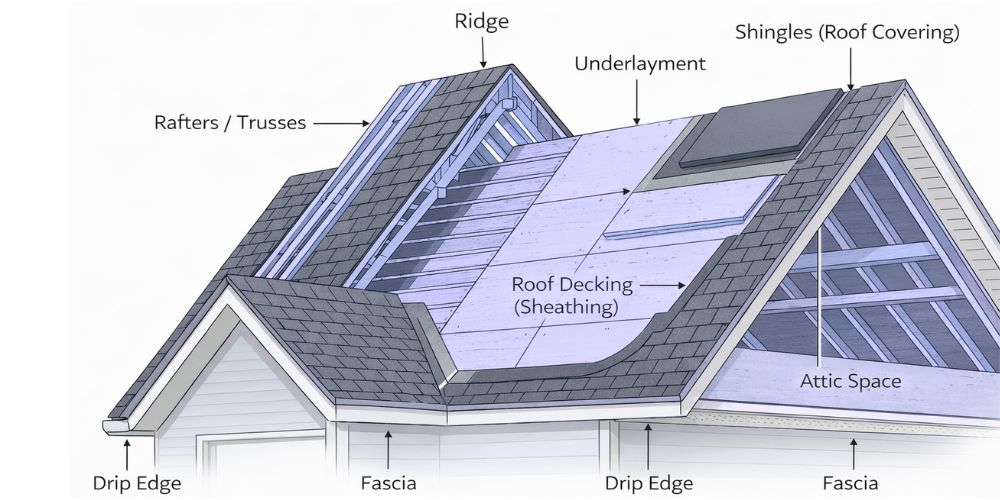
Everything starts with the structure underneath. The majority of houses use either the traditional rafter or the prefabricated trusses, which are commonly used in gable and hip roof designs. The reason why trusses are popular is that they are constructed to precise measurements in a factory, and therefore they are uniform and are normally less expensive.
The roof decking (also referred to as sheathing) is on top. The solid base where all the others are attached is normally plywood or OSB boards. The decking must be robust enough to withstand the wind and all the roofing materials.
Texas Tip: Consider radiant barrier decking. This specialized coating reflects up to 97% of solar heat away from your attic.
Collar Beams: These horizontal beams connect opposing rafters. They are essential for structural stability during the high winds common in Central Texas.
The Weather Barrier: Your Roof’s Raincoat
Right underneath your shingles sits the underlayment. This acts like a backup raincoat for your home. If wind-driven rain gets past your shingles during a storm, the underlayment stops it from soaking into your decking.
Most contractors now use synthetic underlayment instead of old tar paper because it’s tougher and doesn’t tear as easily. It also holds up better over time.
You’ll also find ice and water shield in certain spots. Despite the name, it’s perfect for our wind-driven rain, especially in valleys and along edges where water tends to sit. It creates an extra seal against leaks.
Precision Components: The Water Management Team
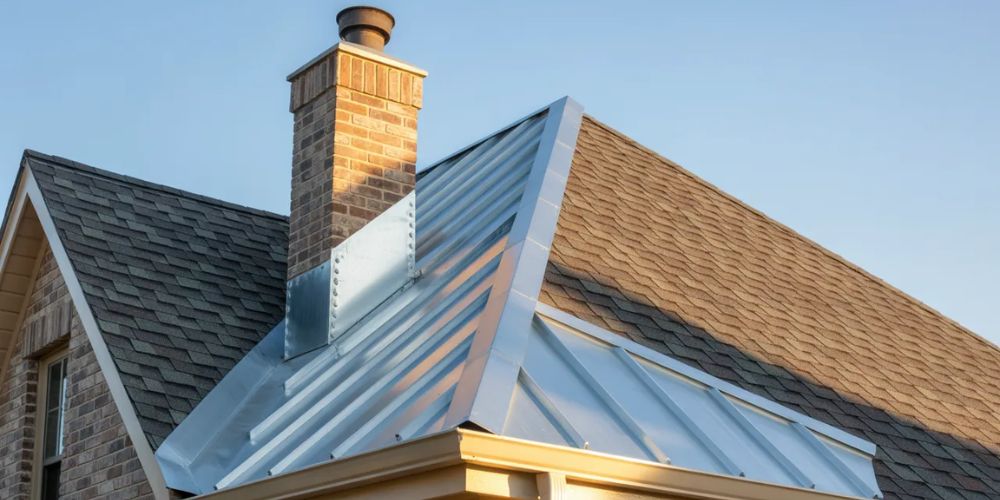
Roof flashing consists of metal pieces around your chimney, skylights, and anywhere your roof meets a wall. These seal the gaps so water can’t sneak through. Poor flashing work is probably the number one cause of roof leaks.
Drip edges protect the fascia board from rotting and direct water away from your foundation. Valleys channel water from two roof slopes down and off your house. When it rains hard, a lot of water flows through valleys, so proper installation is critical.
Fail Point Alert: Vent pipe boots are a common leak source. San Antonio UV rays rot these rubber seals in 7 to 10 years.
Here’s something every San Antonio homeowner should watch. Those rubber seals around your plumbing vent pipes are called boots, and our intense sun breaks down the rubber. They crack in as little as seven to ten years.
Once they crack, rainwater pours straight into your attic. Checking these boots regularly can save you thousands in water damage.
The Respiratory System: Attic Ventilation
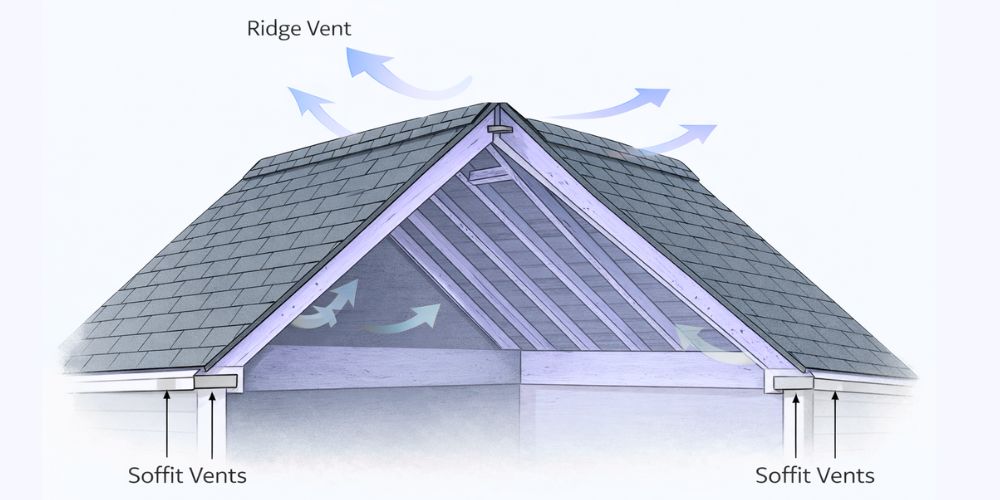
Your roof needs airflow. Without it, heat and moisture can build up in your attic, especially when you consider how the weather impacts your roof. This shortens the life of your shingles, damages the decking, and makes your air conditioner work harder.
Passive vents like ridge vents and soffit vents work together using natural air movement. Active vents like attic fans use mechanical power to move air faster.
Expert Standard: To prevent your attic from becoming an oven, we follow the 1:150 rule, which is one square foot of ventilation for every 150 square feet of attic space.
The Exterior Layer: Your Roof’s Shield
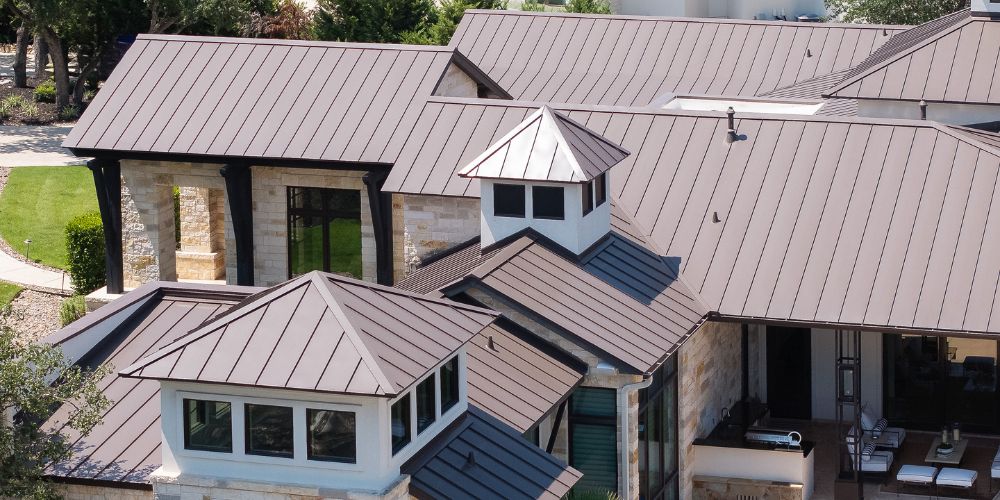
The roof covering is what people see when they look at your house. Around San Antonio, you’ll mostly see architectural asphalt shingles or standing-seam metal roofing.
Asphalt shingles are more affordable and come in many colors. Metal roofing costs more upfront, but handles temperature swings better and lasts longer in intense heat.
Ridge caps seal the peak where two roof slopes meet. Hips point upward where slopes come together, while valleys point down. Both need extra attention during installation.
The Roof Perimeter: Edges That Protect Everything Below
Your fascia is the vertical board where gutters attach. Behind it, you’ve got the soffit—horizontal panels under the overhang with vents for attic airflow.
The eaves are the parts of your roof that stick out past your walls. They keep rain from running down your siding. These perimeter pieces work together to keep moisture out and stop pests from getting into your attic.
Signs Your Roof Needs Replacement
Watch for these warning signs before they create havoc:
- A sagging roofline means structural problems needing immediate attention.
- Water stains on ceilings or walls indicate active leaks.
- After hail, look for dents in metal or bruised shingles.
- Lots of shingle granules in gutters mean your shingles are breaking down.
- Dark streaks or moss mean moisture is getting trapped.
Signs Your Roof Needs Replacement
- Clean gutters twice a year.
- Schedule professional inspections after hail.
- Check sealants every 5 years.
Wrapping Up…
A roof that performs well depends on all these parts working together. A good roof incorporates all these components in its performance. Every section counts, from the trusses to the shingles. This is why it is vital to have professional installations in our climate and to work with experienced roofing professionals.
Knowing the way your roofing system operates, you are able to keep it tidy and spot issues before they arise. Your roof is among the largest investments that shield your home, and therefore, it is worth knowing what is really happening on top of your roof.
Trust the San Antonio Experts. A high-performance roof requires every component to work in perfect harmony to withstand the Texas heat. With over 50 years of experience, Mangold Roofing provides the expert installation and craftsmanship needed to protect your home’s largest investment.