Hail 1 inch or larger can damage a roof, but the threshold that causes real structural damage is typically 1.25 inches. At that size, shingles begin to lose granules, and the protective mat underneath gets exposed. Hail 2 inches or larger causes serious, visible damage on most roof types.
Hail damage on a roof isn’t always obvious, and the size of the hailstone is only part of the story.
After a hailstorm, most homeowners aren’t sure if they’re dealing with hail damage to the roof or just surface marks. The roof may look fine from the ground, but that doesn’t always mean it is.
Some roof hail damage shows up right away, while other signs take weeks to appear. That is where most homeowners miss the early warning signs.
What Size Hail Will Damage a Roof?
Most roof damage starts with hail around 1 inch, but roof condition, material, and storm intensity all affect how severe the damage becomes.
- 1 inch hail → minor damage possible
- 1.25–1.5 inch hail → shingle damage likely
- 2 inches or larger → high risk of serious roof damage
Some damage is visible right away, while other signs take time to appear, which is why many homeowners miss it early.
Hail Size Damage Chart
| Hail Size | Common Comparison | Roof Impact |
|---|---|---|
| 0.25 inch | Pea | Rarely causes damage |
| 0.75 inch | Marble | Minimal wear on older roofs |
| 1 inch | Quarter | Minor damage possible, especially older shingles |
| 1.25–1.5 inch | Half dollar | Shingle damage likely, granule loss begins |
| 1.75 inch | Golf ball | Visible damage probable on most roofs |
| 2+ inch | Egg / larger | High risk of serious structural damage |
Quarter-sized hail (1 inch) can start damaging older shingles, while golf ball-sized hail often causes visible roof damage that may require inspection.
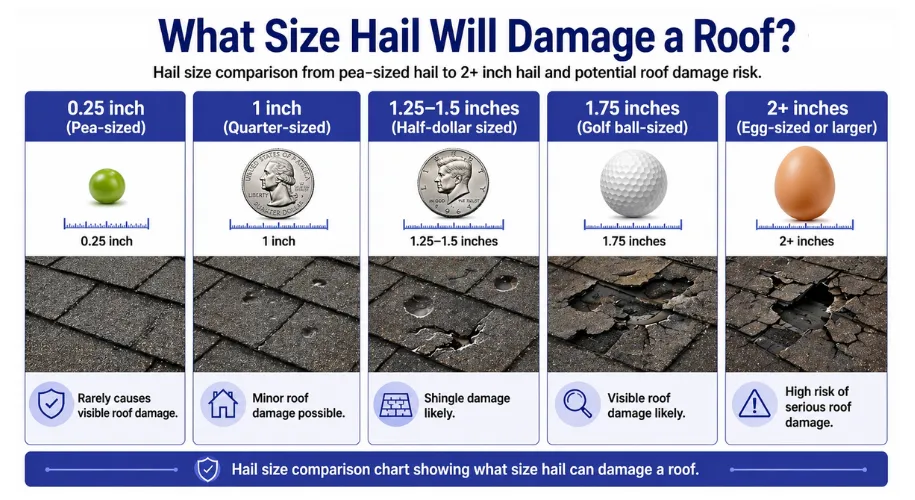
A simple hail size comparison helps explain what size hail can damage a roof. Pea-sized hail (around 0.25 inch) rarely causes damage, while quarter-sized hail (1 inch) can start affecting shingles. Golf ball-sized hail (around 1.75 inches) often leads to visible roof damage.
Roof age plays a big role at the 1-inch mark. It may not visibly damage newer roofs, but it can accelerate granule loss on shingles that are 5+ years old.
Can Small Hail Damage a Roof?
Small hail under 1 inch usually does not cause immediate visible damage. However, repeated storms on the same roof can gradually loosen granules and weaken the shingle surface, even without a single severe event. On roofs older than 10 to 15 years, even pea-sized hail can accelerate wear that was already progressing. The real risk with small hail is cumulative. One storm may look harmless, but three or four over a few years can shorten the roof’s useful life by years. This is why older roofs should be checked after any hailstorm, regardless of hail size.
What Is Hail Damage on a Roof?
Hail damage happens when high-impact hailstones strike the roof surface, weakening protective layers or breaking materials outright.
On asphalt shingles, it often loosens or removes granules. On metal roofs, it usually leaves dents. Different materials react differently, but the result is the same. The roof becomes more exposed over time.
What Does Hail Damage Look Like on a Roof?
Hail damage does not always look serious right away. In many cases, the first signs are subtle and easy to miss, especially from the ground.
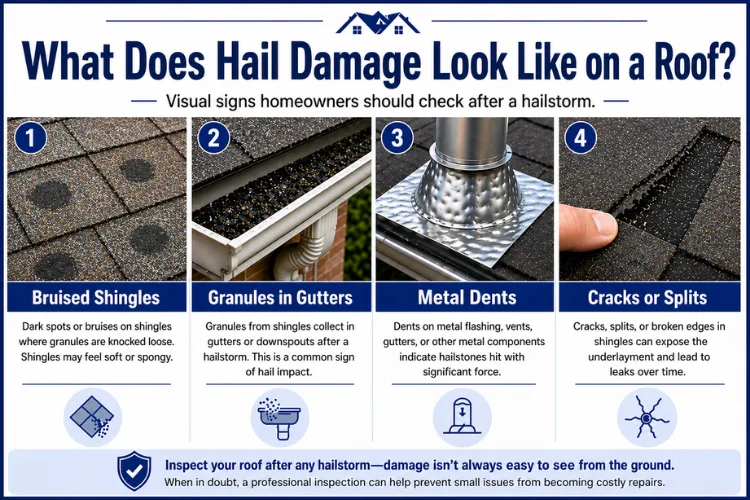
Unlike normal wear, hail damage usually appears in random patterns across the roof rather than in uniform areas. In many cases, damage may look minor from the ground but become more obvious during a closer inspection.
Signs of Hail Damage on a Roof (What to Look For)
Common signs of hail damage on a roof include:
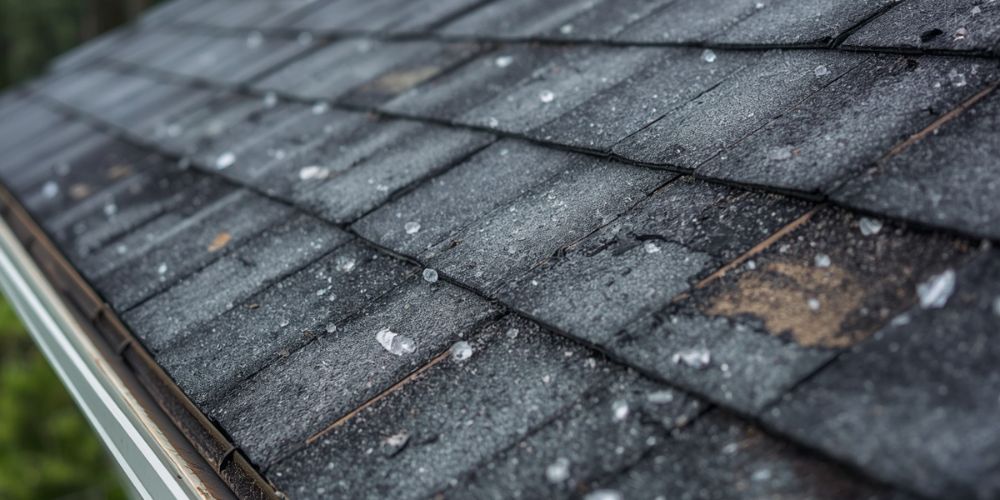
- Dark or bruised spots on asphalt shingles
- Dents on vents, flashing, gutters, or metal surfaces
- Granules collecting in gutters or downspouts
- Small cracks, splits, or soft spots on shingles
- Random damage patterns instead of normal aging
In Texas, including San Antonio, wind-driven hail can sometimes cause more damage than size alone suggests. Some roof hail damage signs are cosmetic, while others can shorten roof life over time.
Some damage is subtle. From the ground, everything may look normal, but close inspection often reveals soft spots, granule loss, or hidden impact areas.
How to Tell If Your Roof Has Hail Damage
Many homeowners ask how to tell if their roof has hail damage without climbing up. Here are the most reliable ground-level and close-up indicators:
- Gutters and downspouts: Dents along the gutter edges or granules washing out of downspouts are strong early signs. Hail damage to gutters often appears before shingle damage is visible.
- Soft spots on shingles: Press gently on a shingle. If it feels spongy or gives slightly, the mat underneath may be bruised.
- Uniform dent pattern: On metal roofs or vents, look for a consistent dent pattern that matches hailstone size. Random dents in a grid-like spread confirm hail vs. fallen debris.
- Old vs. new hail damage: Old hail damage on a roof appears as hardened, oxidized impact points. New damage looks darker and may feel soft.
How to Identify Hail Damage on Your Roof
There’s a difference between spotting damage and confirming it. The goal here isn’t just spotting marks, but confirming whether those marks are actual impact damage.
Step 1: Ground-level check (without climbing):
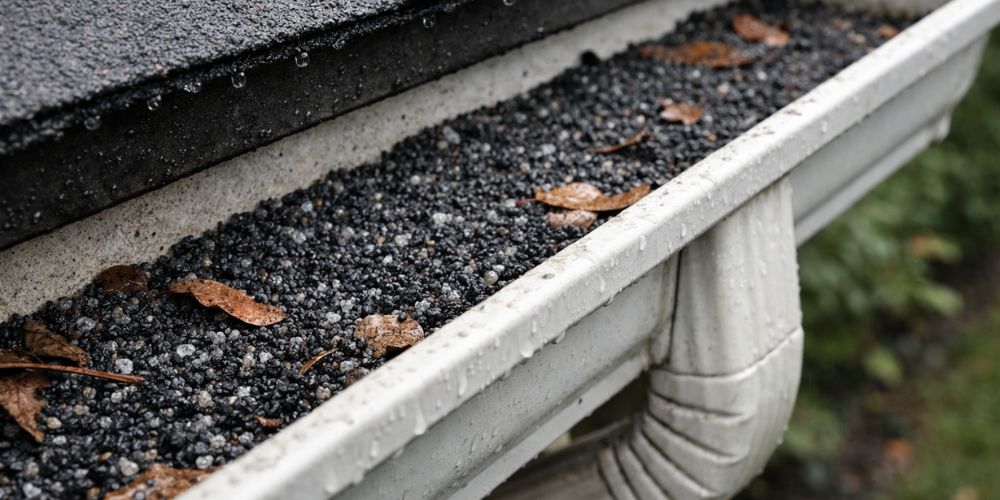
- Granules in gutters or washing out of downspouts
- Dents on metal vents or flashing
- Debris around the property perimeter
Step 2: Close-up inspection (when you can safely access the roof):
- Soft or bruised spots on shingles
- Uneven granule loss across the surface
- Small cracks that don’t follow age-wear patterns
Photos can be misleading. Lighting and camera angle can hide or exaggerate damage, so an in-person check always matters more than pictures. Knowing how to identify hail damage early can help prevent bigger issues later.
Damage around edges and penetrations is easier to miss without understanding how roof flashing works.
Hail Damage Roof Inspection: What Professionals Check
A proper hail damage roof inspection goes beyond surface-level signs.
Roofers usually check:
- Shingle integrity and soft impact areas
- Granule loss patterns across slopes
- Flashing, vents, and roof penetrations
- Hidden damage that may not be visible immediately
Professionals also check gutters and downspouts for hail damage, since these surfaces show impact clearly even when shingles look intact.
Inspections are especially important if you are considering an insurance claim, even if you have already followed a basic roof inspection. What looks minor can sometimes qualify as functional damage.
Accurate inspection also matters for insurance claims, where documented hail damage determines coverage eligibility.
When Hail Damage Becomes a Bigger Problem
Not all roof hail damage causes immediate leaks, but that does not mean it is harmless.
Minor impact can weaken shingles without breaking them right away. Over time, those spots can lead to:
- Slow leaks that can appear 3 to 12 months after impact, as weakened spots fail under rain pressure
- Water intrusion under shingles that worsens after each storm
- Gradual structural issues that are costly to fix once they develop
Damage that looks small today can turn into a problem months later, especially after rain or heat cycles.
Repair vs Monitor: What Should Homeowners Do Next
This is where most people get stuck.
Monitor: (if all of these apply)
- 1 to 3 impact points on a newer roof (under 7 years old)
- No granule loss visible in gutters after rain
- No soft or bruised spots felt on the shingles
Repair: (if all of these apply)
- 4 or more impact points across the roof
- Granule loss visible in gutters after rain
- Soft or bruised shingle spots found during inspection
- Damage near flashing or vents
Replace: (if all of these apply)
- Widespread damage across multiple slopes
- Structural soft spots present
- The roof is 15 or more years old with documented hail impacts
Not all hail damage requires full replacement. In many cases, targeted repair or simply keeping an eye on the roof is the better option. If you are unsure which category your roof falls into, a professional inspection can help confirm whether monitoring, repair, or replacement makes the most sense.
When to Take Action After a Hailstorm
You should take a closer look if:
- Hail was larger than 1 inch
- You notice granules collecting in gutters
- Nearby properties show visible damage
- Your roof is older or already worn out
You notice dents on gutters, downspouts, or metal vents. These are early physical proof hail made contact.
If something feels off, it is better to check early than wait for signs like leaks to appear. Most hail damage affects an asphalt shingle roof, which is more vulnerable to granule loss.
Hail Damage in San Antonio and Texas Storm Zones
San Antonio and many parts of Texas regularly experience hailstorms strong enough to damage asphalt shingles, metal roofing, and flashing. Even quarter-size to golf ball-size hail can create roof issues depending on roof age, wind speed, and storm intensity. Spring and severe weather season often bring the highest hail risk, which is why Texas homeowners should inspect roofs after major storms.
Conclusion
After inspecting hail-damaged roofs across Texas, the pattern we see most often is homeowners waiting too long, not because they ignored it, but because the early signs are easy to miss.
A quick check can help, but some issues only show up with time. Staying aware of small changes can prevent bigger problems later.
Mangold Roofing has helped homeowners and businesses across Texas understand the difference between minor impact and real structural risk. From San Antonio to surrounding Texas communities, hail damage often varies by roof age, material, and storm severity. From asphalt shingles to metal roofs, different materials show damage differently, which is why a trained eye catches what a ground check misses.
Even small hail can cause damage that isn’t immediately visible, which is why early inspection and awareness matter more than size alone.
FAQs
1. What size hail damages a roof?
Hail around 1 inch may cause minor damage, while hail between 1.25 and 1.5 inches can damage shingles. Hail larger than 2 inches has a high risk of serious roof damage.
2. Can small hail damage a roof or new shingles?
Small hail under 1 inch, including pea-size hail (around 0.25 inch), usually does not cause immediate visible damage on newer roofs. However, repeated storms or older shingles may still experience granule loss and accelerated wear over time.
3. Can quarter-size hail damage a roof?
Quarter-size hail (around 1 inch) can damage older or worn shingles and may loosen granules, even if major damage is not immediately visible.
4. How soon should you check your roof after a hailstorm?
It is best to check within a few days. Some signs are easier to spot early, before weather changes affect the surface.
5. Is all hail damage visible from the ground?
No. Some damage is hidden and only noticeable during a close inspection.
6. What does hail damage look like on shingles?
On asphalt shingles, hail damage appears as dark circular bruised spots where granules have been knocked loose. The exposed area looks darker than the surrounding shingles and may feel soft when pressed. On older shingles, it can blend in with general wear.
7. Does hail damage metal roofs differently?
Yes. Hail damage on metal roofs shows up as visible dents rather than granule loss. The dents are usually round and concentrated in the direction the storm came from. Repeated impacts can weaken protective coatings over time.
8. Can hail damage cause leaks later?
Yes. Even small impact areas can weaken shingles and lead to leaks over time.
9. Does San Antonio get hail large enough to damage roofs?
Yes. San Antonio and surrounding Texas areas can experience hailstorms ranging from pea size to golf ball size or larger. Roof damage depends on hail size, wind speed, and roof condition.