What do most people never consider when they are having a metal roof installed?
Ventilation.
It becomes one of those backstage factors that can turn out to make or break your roof’s performance in the future. And here is one particularly crucial thing: the air gap.
It may seem technical; however, once you know what it does, it is rather simple.
What Is an Air Gap in a Metal Roof?
An air gap is simply a space. Typically, the measurement ranges from half an inch to a few inches. You can find this gap between your metal roof panels and the roof deck below them.
Furring strips or battens create this airspace under a metal roof when you place them between the metal panels. This raises the panels above the solid surface below.
The roof acts like a self-cleaning, large ventilation system. It needs no moving parts and does not require power.
Metal roof systems retain the air gap to prevent contact between the metal and the roof deck as well. This helps when the metal expands and contracts with temperature changes. It also reduces condensation problems.
It may seem simple, but it has a significant impact on roof efficiency.
Why Air Gaps Matter for Your Metal Roof

Prevents heat buildup & lowers cooling costs

Allows panels to expand & contract safely

Reduces condensation & moisture damage

Extends roof lifespan & efficiency
Get the airflow right protect your home and make your roof last longer.

Why Does a Metal Roof Need an Air Gap?
Metal roofs get hot when the sun beats down on them all day. Without an air gap, all that heat just sits there with nowhere to go. This creates problems you don’t want to deal with.
First, your cooling costs go way up because your air conditioner has to work harder, as we explained in our guide on how weather impacts roofs.
Second, you’ll start getting moisture problems when warm air hits the cooler roof deck underneath. This can lead to condensation, which damages your roof structure and insulation over time.
Most metal roof ventilation requirements include air gaps because they prevent these issues. The gap stops ice dams from forming in cold weather and keeps your attic from overheating in summer. It also gives the metal room to expand and contract when temperatures change, which metal naturally does.
Additionally, when contractors install metal roofing without proper ventilation, you may encounter potential warranty issues in the future. So does a metal roof need an air gap? Yes, your roof needs to work properly and last as long as it should.
Ideal Air Gap Size and Placement for Metal Roofing
Most air gaps work best when they’re between 1 and 4 inches. If you live somewhere hot, go bigger (closer to 4 inches) so more air can move through and cool things down.
Where you put the air gap in metal roof systems matters just as much. You need air flowing from the bottom of your roof to the top, no breaks.
Picture it like this: air comes in at the bottom, travels up under your metal roof panels, and exits at the peak. If there’s a gap in that pathway, the whole thing stops working.
When your contractor installs your metal roofing, they should make sure there’s consistent space between your roof deck and the metal panels. You’ll also need vents at the bottom to let air in and vents at the top to let it out. That is truly that simple.
How to Vent a Metal Roof Properly
Getting your metal roof ventilation right doesn’t have to be complicated, but it does require the right approach.
Here’s what you need to set up:
- Intake vents along your eaves or soffits (that’s where the cool air gets in).
- Exhaust vents up near the ridge (hot air’s escape route).
- Ridge vents are your friend with metal roofing. They look clean and do the job right, especially with standing seam vs corrugated roofs.
The best roof vents for metal roofs come with proper gaskets and flashing that work with your panels instead of fighting them.
The math part (don’t worry, it’s easy):
- You want about 1 square foot of ventilation for every 150 square feet of attic.
- Split that roughly half and half between air coming in and going out.
- Too little ventilation reduces efficiency, while too much can create airflow imbalances.
And here’s something most people don’t think about—where you put these roof vents on your metal roofing matters way more than you’d think. Work with how air naturally wants to move, not against it.
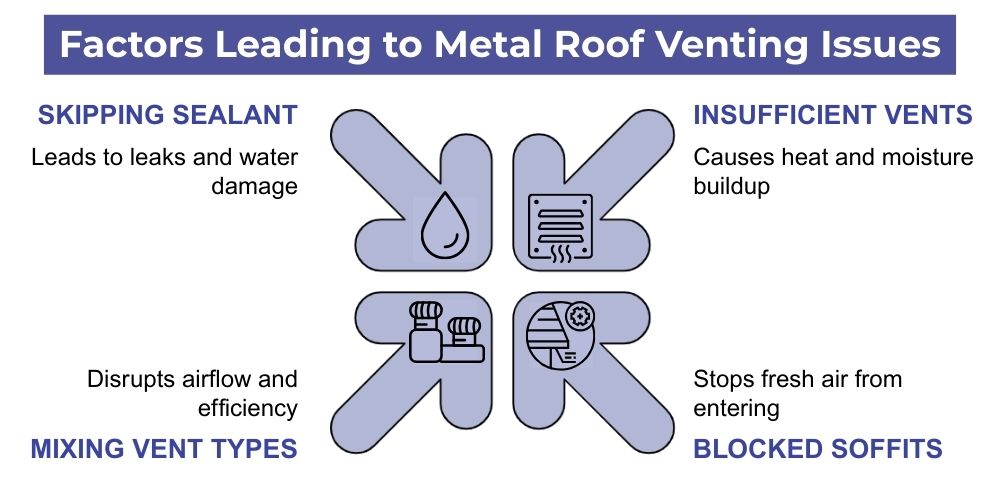
Common Mistakes When Venting a Metal Roof
Metal roof ventilation seems straightforward, but there are some common slip-ups that can cause significant issues down the road.
The most frequent mistakes include:
- Not installing enough roof vents – Many people think metal roofs need less ventilation than other materials. However, metal roofs have specific ventilation needs.
- Mixing incompatible vent types – Installing ridge vents near gable vents creates airflow conflicts that mess up the whole system.
- Blocking soffit vents during installation – This kills the intake airflow your roof needs to breathe properly.
- Skipping proper sealing around vent penetrations – This can lead to leaks and water damage, making drip edge flashing especially important.
These shortcuts may lower initial costs but often lead to higher energy bills and roof damage over time. Getting the ventilation right from the start is always worth the investment.
Conclusion
That right-sized air gap is one of those things that pays in the long run.
Here at Mangold Roofing, we have experienced how effective ventilation is in making the difference between successful and unsuccessful performance of a metal roof.
We work hard to make sure everything is perfect, drawing from years of expertise in metal roofing systems. This includes following ventilation codes, saving energy, and ensuring your roof lasts as long as it should. Contact us now.