You notice a few orange spots on your metal roof and immediately start wondering if the roof is failing. The good news is that rust does not automatically mean the entire roof needs to be replaced.
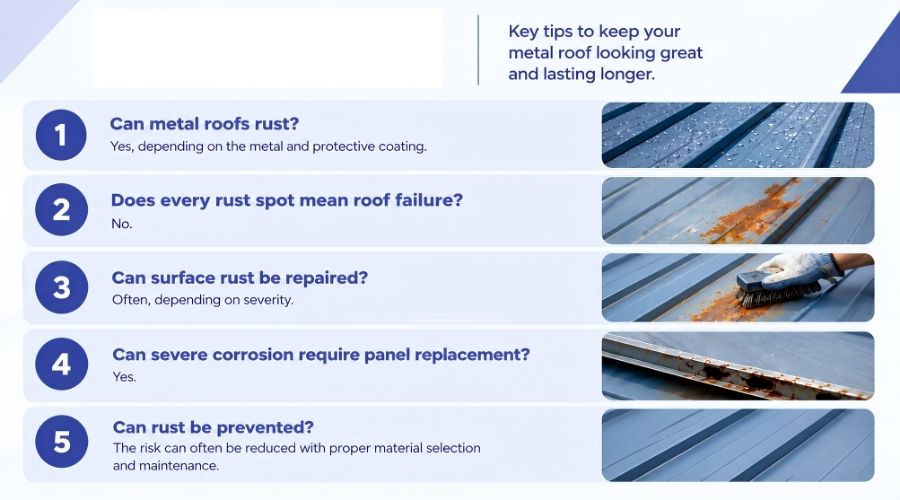
Yes, a metal roof can rust. Steel-based roofing relies on protective coatings to resist corrosion. If that protection is scratched, worn away, or damaged, rust can develop. What matters is where the rust is, how far it has progressed, and why it started.
Catching rust early gives you more options. A small surface spot is very different from deep pitting or a hole through the panel. The risk depends on the type of metal, protective coating, environment, installation, and maintenance.
So if you spot rust, do not jump straight to roof replacement. First figure out what caused it and how deep the corrosion has gone.
What Causes a Metal Roof to Rust?
Rust rarely has a single cause. Most of the time it is a combination of things working against the roof at the same time. Moisture, damaged coatings, debris, fasteners, installation damage, and the surrounding environment can all play a role.
Damaged Protective Coating
The protective finish on a metal roof is there for a reason. Scratches, cuts, abrasions, impact damage, or other coating failures can expose the metal underneath.
Once that protective layer is compromised, moisture has a path to the underlying steel. Small areas of coating damage can therefore become starting points for corrosion.
Wet Leaves, Dirt, and Debris
A layer of wet leaves sitting on a roof can do more than make the roof look dirty.
Debris can trap moisture against the metal and keep an area wet longer than it would be under normal drainage conditions. Over time, that repeated moisture exposure can increase corrosion risk.
This is one reason it is worth paying attention to areas where debris tends to collect rather than only looking at the large, open sections of the roof.
Standing Water
Metal roofing should shed water, but some areas may drain poorly because of roof design, debris, damage, or other conditions.
Water sitting in the same spot is worth investigating. If rust keeps appearing where water collects, treating the rust without fixing the drainage is like mopping the floor while the tap is still running. Find out why the water is not leaving before doing anything else.
Rusting Fasteners
Sometimes the first rust you notice is not on the panel. It is around the screws.
Exposed fasteners can develop corrosion when the protective finish is damaged, washers deteriorate, or moisture remains around the connection. Fastener problems do not automatically mean the entire roof is failing, but they deserve a closer look because these areas can also become water-entry points.
Scratches and Damage During Installation
Metal panels can be damaged during handling, cutting, or installation.
A scratch may seem minor when the roof is new, but any damage to the protective surface can leave the underlying metal more exposed to moisture. Proper panel handling and installation help reduce this risk.
Dissimilar Metals
Rust can also become a concern when incompatible metals come into contact in the presence of moisture.
This type of corrosion is often referred to as galvanic corrosion. In simple terms, contact between different metals can create conditions that accelerate corrosion of one of them.
The fix is not simply to paint the affected area. The materials and connection need to be considered together.
Salt, Humidity, and Environmental Exposure
The surrounding environment matters too.
Coastal air, high humidity, industrial pollutants, and other aggressive conditions can increase corrosion exposure. The same roof type can corrode very differently depending on where it sits.
Interior Condensation
Not all corrosion starts on the outside of the roof.
Think of a cold glass on a humid day. Condensation forms on the outside without any rain involved. The same thing can happen on the underside of a metal panel when the attic or roof assembly traps humid air without enough ventilation. The rust starts from the inside out, which is why treating only what you can see from the ground can miss the real problem.
What Does Rust on a Metal Roof Look Like?
Rust is not always a large orange patch that immediately tells you what is happening.
You might see:
Small Orange or Brown Spots
Small spots may be an early sign of surface corrosion. They are worth investigating before assuming they are harmless or, on the other hand, assuming the roof is ruined.
Rust Around Screws
Rust concentrated around fasteners may point toward a problem with the screw, washer, coating, or moisture exposure around the connection.
Rust Streaks or Stains
A streak can travel away from the original source, especially where water runs across the panel.
The visible stain may therefore not be the exact place where the problem started.
Bubbling or Peeling Coating
If the coating begins to bubble, blister, or peel, corrosion may be developing beneath the finish.
Flaking or Scaling Metal
Once metal begins to flake or scale, the corrosion has progressed beyond a simple surface discoloration.
Holes or Perforations
A rust hole is much more concerning than a small surface spot because the metal itself has been lost.
Do Not Panic, But Do Not Ignore It
Small surface spot: investigate the cause.
Widespread rust: have the roof evaluated.
Flaking or pitting: get a closer professional assessment.
Rust holes: determine whether the affected panel can be repaired or needs replacement.
The appearance gives you a starting point, not a final diagnosis.
Is Rust on a Metal Roof a Serious Problem?
It depends on the depth, location, and extent of the corrosion.
A small surface spot is not the same as deep pitting across a panel. Likewise, rust around one fastener is a different problem from widespread corrosion affecting multiple panels.
| What You See | What It May Indicate | What to Do |
| Tiny surface spots | Early corrosion | Investigate and monitor |
| Rust around screws | Fastener or coating issue | Inspect closely |
| Localized surface rust | Limited corrosion | Determine the cause |
| Bubbling or flaking | Advancing corrosion | Professional assessment |
| Deep pitting | Metal deterioration | Repair assessment |
| Rust holes | Panel failure | Repair or replacement assessment |
| Widespread corrosion | Extensive deterioration | Full roof evaluation |
There is no universal percentage or cutoff that tells you when a roof must be replaced.
The decision depends on how deeply the metal has corroded, where the damage is located, how much of the roof is affected, and the condition of the rest of the roofing system.
Why Is My Metal Roof Rusting Around the Screws?
If rust is concentrated around the screws, the fasteners deserve a closer look.
Possible contributors include:
- Damaged coating around the fastener
- Deteriorated washers
- Moisture collecting around the connection
- Incompatible fastener materials
- Age-related deterioration
- Installation damage
Rust around one or two screws does not automatically mean the whole roof is bad. However, several rusting fasteners in the same area may point to a broader issue.
Problems with fasteners can also be related to metal roof installation mistakes, so the surrounding panel and attachment points should be considered rather than treating the rust stain by itself.
Can a Rusted Metal Roof Be Repaired?
Sometimes, yes. It depends on how deep the damage goes.
The right repair depends on whether the corrosion is limited to the surface or has damaged the metal itself.
Surface Rust
Limited surface corrosion may sometimes be treated after the affected area is properly prepared. In some cases, the roof can then be recoated with a compatible system.
The key is that the preparation and coating need to be appropriate for the existing roof.
Localized Corrosion
When corrosion is limited to a particular area, the repair may involve addressing the affected panel, fasteners, coating, or other components.
Correct the cause at the same time. Otherwise, the rust can return.
Deep Corrosion
Once corrosion has caused significant pitting, weakened the panel, or created holes, a coating cannot restore metal that is no longer there.
At that point, panel repair or replacement may make more sense depending on the condition.
When Panel Replacement Makes More Sense
Severely deteriorated panels may be beyond practical surface treatment. Replacement can become the better option when the metal has lost significant thickness or has been perforated.
Rust does not automatically equal replacement, but painting over rust does not automatically solve the problem either.
Can You Paint Over a Rusty Metal Roof?
Simply putting paint over rust and calling the job finished is not a safe or effective approach.
Assess the corrosion and properly prepare the affected surface before applying any coating. The new coating also needs to be compatible with the existing roofing system.
Paint can help protect a suitable surface after proper preparation, but it cannot reverse deep corrosion or rebuild metal that has already been lost.
If the roof has significant pitting, flaking, or perforation, coating it without addressing the underlying deterioration can create a false sense of security.
If you are considering recoating your metal roof, understanding how metal roof painting works can help you determine whether your roof is a suitable candidate before committing to a coating project.
How to Prevent a Metal Roof From Rusting
You cannot eliminate corrosion risk completely, but you can reduce it.
Keep Debris From Sitting on the Roof
Wet leaves, branches, and dirt can trap moisture against the panels. Removing buildup helps the roof dry normally.
Keep Drainage Paths Clear
Water should be able to leave the roof rather than remain against the same area.
Address Scratches and Coating Damage
Do not ignore damaged areas simply because they are small. Early attention can help prevent corrosion from progressing.
Inspect Exposed Fasteners
Look for rust around screws, damaged washers, and coating deterioration.
Avoid Incompatible Metal Contact
Where different metals meet, make sure the materials and installation details are appropriate for the roofing system.
Check Penetrations and Flashing
Areas around vents, pipes, flashing, and other roof penetrations deserve attention because they can be exposed to water and movement.
Follow the Manufacturer’s Maintenance Recommendations
Different metal roofing systems have different coatings, materials, and care requirements. The manufacturer’s recommendations should take precedence over generic maintenance advice.
How to Tell If Your Metal Roof Rust Is Getting Worse
Rust that stays in one small spot is different from corrosion that keeps spreading.
Watch for:
- Rust spots becoming larger
- Orange or brown areas spreading across the panel
- Bubbling or peeling paint
- Flaking or scaling
- Deep pitting
- Rust around multiple fasteners
- Water stains underneath the roof
- New leaks
- Holes in the metal
If You See This, Do Not Wait
Rust plus a hole: Get the affected area assessed promptly.
Rust plus an active leak: The water-entry problem needs attention.
Widespread flaking or pitting: Have the roof professionally evaluated.
Small, isolated surface rust: Find out why it started before assuming the entire roof needs replacement.
Does a Rusty Metal Roof Mean You Need a New Roof?
No, not necessarily.
A rusty roof can fall into several categories.
Minor or localized corrosion: Repair may be possible.
Moderate deterioration: Localized panel, fastener, or coating work may be appropriate.
Severe or widespread corrosion: Replacement may make more sense if the metal has lost significant strength or has been perforated.
The more important question is how deeply the corrosion has affected the roof and what caused it in the first place. That distinction can prevent both overreacting to a small problem and overlooking a serious one.
Rust vs. Other Metal Roof Problems
Not every unusual mark on a metal roof is rust.
| What You See | It Could Be |
| Orange or brown spots | Rust or corrosion |
| Wavy panels | Oil canning |
| Black or green discoloration | Dirt, biological growth, oxidation, or staining |
| White or chalky appearance | Coating weathering or oxidation |
| Water stains | Leak or condensation |
| Dents | Hail or impact damage |
A roof can also have more than one issue at the same time.
For example, a panel may have oil canning and rust, but the two conditions are not the same problem and should not be treated the same way.
When Should You Call a Roofer?
If you are not sure whether you are looking at surface rust or deeper corrosion, an inspection can help determine what is actually happening.
Have the roof inspected if you notice any of these:
- Rust that is spreading
- Deep pitting or flaking
- Rust holes
- Rust around multiple fasteners
- New leaks
- Damaged seams or flashing
- Corrosion after a storm or impact damage
- Uncertainty about whether the existing coating can be restored
A closer look can help answer the question that matters most: Can this roof be maintained, repaired, or does part of it need to be replaced?
Conclusion
A metal roof can rust, but a rust spot does not automatically mean the roof has reached the end of its life.
The first step is to figure out what caused the corrosion and whether it is limited to the surface or has damaged the metal itself. Small areas of surface rust may be repairable, while deep pitting, widespread corrosion, or perforated panels can require a more extensive solution.
Keeping debris off the roof, protecting damaged coatings, watching fasteners, and addressing moisture problems early can reduce corrosion risk.
One orange spot is not a death sentence for your roof. But it is a signal worth paying attention to. The difference between a simple repair and a full panel replacement often comes down to how early you catch it.
Mangold Roofing inspects metal roofs across San Antonio and helps homeowners figure out exactly what they are dealing with, whether that is surface rust, coating failure, or something that needs real attention, before it turns into a bigger problem.
FAQs
Can a metal roof rust?
Yes. Steel-based metal roofing can rust if the protective coating is damaged or the underlying metal is repeatedly exposed to moisture and oxygen. The risk depends on the roofing material, protective coating, environment, installation, and maintenance.
Do metal roofs rust over time?
They can, particularly when protective coatings deteriorate or the roof is exposed to conditions that encourage corrosion. Proper material selection, installation, maintenance, and early attention to coating damage can reduce the risk.
Why is my metal roof rusting?
Common causes include damaged coatings, trapped moisture from leaves or debris, standing water, rusting fasteners, installation damage, contact between incompatible metals, environmental exposure, and in some assemblies, interior condensation.
Is rust on a metal roof a problem?
It depends on the extent of the corrosion. Small surface rust may be manageable, while deep pitting, flaking, perforation, widespread corrosion, or rust combined with leaks can indicate a more serious roofing problem.
Do metal roof screws rust?
They can. Rust around screws may result from coating damage, deteriorated washers, moisture exposure, incompatible materials, age, or installation issues. Localized fastener rust does not necessarily mean the entire roof needs replacement.
Can a rusted metal roof be repaired?
Sometimes. Surface rust or localized corrosion may be repairable after the cause is identified and the affected area is properly prepared. Severe corrosion, deep pitting, or holes may require panel replacement.
How do you stop a metal roof from rusting?
You cannot eliminate the risk completely, but you can reduce it by keeping wet debris off the roof, maintaining drainage, addressing coating damage, inspecting exposed fasteners, preventing incompatible metal contact, and following the manufacturer’s maintenance recommendations.
Is it safe to paint over rust on a metal roof?
Paint alone cannot fix active rust. The surface needs proper preparation and the coating must be compatible with the existing roofing system. If the metal has significant pitting or perforation, coating without addressing the underlying damage can give a false sense of security. A professional assessment helps determine whether recoating is a realistic option.
Does galvanized metal roofing rust?
Galvanized steel has a protective zinc coating that helps resist corrosion, but the protection can deteriorate over time or be damaged. Once the underlying steel is exposed, corrosion can develop.