Metal roof leaks are frustrating because the source is not always obvious. In many cases, the roof only leaks during heavy rain, strong wind, or after storms, making the problem difficult to trace.
A leaking metal roof is often caused by loose screws, worn rubber washers, flashing failure, seam separation, or installation mistakes around roof penetrations. The good news is that not every leak means the entire roof needs replacement.
Understanding where metal roofs usually fail can help you identify problems early before water damage spreads into the decking, insulation, or interior ceilings.
Quick Answer: Why Is a Metal Roof Leaking?
Yes, metal roofs can leak over time, especially around screws, seams, flashing, and roof penetrations. Heavy rain, wind-driven water, loose fasteners, worn washers, and poor installation are some of the most common causes. Many leaks can be repaired without replacing the full roofing system.
Do Metal Roofs Leak?
Metal roofs are designed to handle rain, wind, and weather exposure, but leaks can still happen when certain roofing components fail.
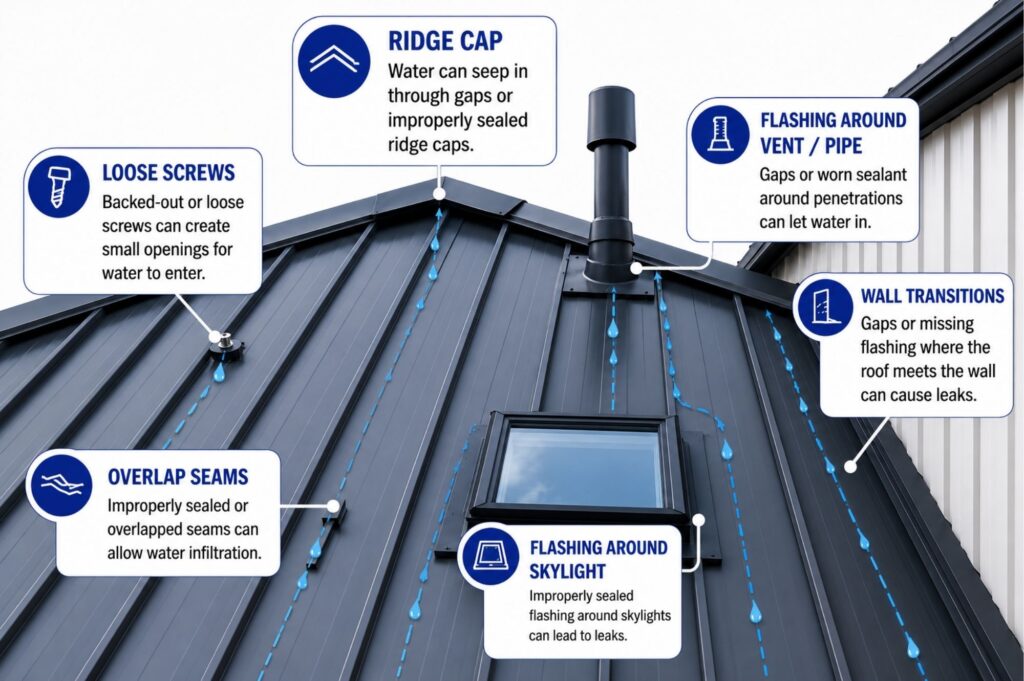
In most cases, the metal panels themselves are not the problem. Leaks usually develop around:
- exposed fasteners
- overlap seams
- flashing
- ridge caps
- roof penetrations
Expansion and contraction also affect metal roofing systems over time. As temperatures change, screws, sealants, and seams experience movement that can eventually create small openings for water intrusion.
Exposed fastener systems are generally more vulnerable to leaks than concealed fastener systems because the screws remain directly exposed to weather conditions year after year.
Most Common Causes of a Leaking Metal Roof
Many metal roof leaks start small and become worse over time. Some only appear during heavy rain, while others slowly develop as roofing materials age.
Loose or Backed-Out Screws
One of the most common causes of a metal roof leaking is loose fasteners.
Metal roofing expands and contracts constantly with temperature changes. Over time, this movement can cause screws to slowly back out, especially on older exposed-fastener systems.
When screws loosen, water can enter around the fastener hole and eventually reach the underlayment or decking beneath the panels.
Improper screw installation can also increase the risk of leaks over time, especially if fasteners were overdriven, underdriven, or placed incorrectly during installation. Some of the most common fastener-related problems are covered in these metal roof installation mistakes.
Worn Rubber Washers
Most exposed fasteners include neoprene rubber washers designed to create a watertight seal around the screw.
Over time, UV exposure, heat, and weather can cause these washers to:
- crack
- dry out
- flatten
- lose flexibility
Once the washer fails, water can begin entering around the screw even if the fastener itself still looks intact.
Older roofs in hot climates often experience washer deterioration faster because of constant heat exposure and roof movement.
Overlap or Seam Separation
Metal roof seams and panel overlaps are another common leak point.
If the overlap spacing was installed incorrectly or the seams begin separating over time, wind-driven rain can push water underneath the panels.
This problem is especially common on:
- low-slope metal roofs
- older exposed-fastener systems
- Roofs with poor panel alignment
Leaks around seams are often difficult to detect because water may travel several feet before becoming visible inside the home.
Flashing Failure Around Roof Openings
Flashing protects roof penetrations and transitions where water naturally collects.
Common leak-prone areas include:
- chimneys
- skylights
- plumbing vents
- wall transitions
- roof valleys
Flashing failure is one of the most common causes of hidden metal roof leaks because water can enter slowly around edges and remain unnoticed for months.
Poorly installed flashing, damaged sealant, or aging materials can all allow moisture to work underneath the roofing system. Understanding how roof flashing works on metal roofing systems can help explain why leaks often begin around these transition points.
Ridge Cap Leaks
The ridge cap seals the highest point of the roof where two slopes meet.
If closure strips are missing or the ridge cap was not sealed properly, wind-driven rain can enter beneath the cap and travel downward into the roofing system. The design of a properly installed metal roof ridge cap plays a major role in keeping water out of these vulnerable areas.
Some ridge cap leaks only appear during severe storms because strong winds force rain upward into small gaps that normally stay dry.
Why Does My Metal Roof Leak in Heavy Rain?
Some metal roofs only leak during heavy rain because water enters areas that normally stay dry during lighter storms.
Heavy rain leaks are commonly linked to:
- wind-driven rain
- seam blowback
- roof pitch problems
- flashing overflow
- underlayment saturation
Strong winds can push rain upward beneath panel overlaps or flashing edges, especially on lower-slope roofs that do not meet proper minimum pitch for metal roofs requirements.
In some cases, the roof may not actually have a visible hole. Instead, water enters because pressure and wind force it into weak areas around seams or penetrations.
This is why homeowners often notice leaks only during severe storms but not during regular rainfall.
How to Find a Leak in a Metal Roof
Finding the source of a metal roof leak can be difficult because water often travels before becoming visible inside the building.
Start by checking the attic for:
- water stains
- damp insulation
- mold growth
- dark wood discoloration
Then inspect the roof surface for:
- loose fasteners
- cracked sealant
- separated seams
- rust spots
- damaged flashing
A controlled water hose test can sometimes help isolate the leak source by spraying specific roof sections one at a time.
Before inspecting a metal roof closely, it is important to understand how to walk on a roof safely to avoid injury or accidental roof damage.
| Area to Check | Possible Leak Sign |
|---|---|
| Screws/Fasteners | Loose screws or cracked washers |
| Flashing | Gaps or lifted edges |
| Overlap Seams | Water stains or separation |
| Ridge Cap | Moisture near roof peak |
| Attic | Damp insulation or stains |
How to Fix a Leaking Metal Roof
The right repair depends on what is actually causing the leak.
Some minor problems can be temporarily controlled with basic repairs, while larger issues may require professional correction.
Temporary DIY Fixes
Minor leaks may sometimes be reduced temporarily by:
- tightening loose screws
- replacing damaged fasteners
- applying roof sealant
- clearing debris buildup
- resealing small flashing gaps
However, temporary repairs do not always solve the underlying issue. If the leak is caused by improper installation, structural movement, or widespread seam failure, the problem may return quickly.
Professional Metal Roof Repairs
Professional roof repairs are usually necessary when leaks involve:
- flashing replacement
- seam resealing
- widespread fastener failure
- damaged panels
- structural moisture damage
In some situations, recurring leaks are caused by larger installation issues rather than one isolated repair point.
Best Sealants and Coatings for Metal Roof Leaks
Sealants and roof coatings can help stop certain types of leaks when applied correctly.
Common repair products include:
| Product Type | Best Used For |
|---|---|
| Silicone Sealant | Small seams and flashing gaps |
| Polyurethane Sealant | Expansion-prone joints |
| Elastomeric Coating | Large surface waterproofing |
Sealants work best on smaller repair areas where the underlying roofing structure is still in good condition, especially when the metal roof moisture barrier beneath the panels is still functioning properly.
If panels are heavily rusted, separated, or structurally damaged, coatings alone usually will not solve the problem long term.
Metal Roof Leak Repair Cost
Metal roof leak repair costs vary depending on the severity and location of the damage.
Minor repairs are usually less expensive than widespread moisture damage or panel replacement.
| Repair Type | Typical Cost Range |
|---|---|
| Screw Replacement | Low |
| Flashing Repair | Moderate |
| Seam Resealing | Moderate |
| Panel Replacement | Higher |
The final repair cost depends on:
- roof accessibility
- roof pitch
- extent of water damage
- number of affected areas
- roofing system type
When a Leak Means Bigger Roofing Problems
Not all leaks stay minor.
Repeated water intrusion can eventually lead to:
- rotten decking
- mold growth
- rusted panels
- insulation damage
- interior ceiling damage
If leaks continue appearing in different areas, the problem may involve the roofing system itself rather than one isolated repair point.
Widespread installation problems, aging fasteners, or structural movement can all create recurring leak patterns over time.
Regular roof maintenance tips can help identify smaller roofing issues before recurring leaks turn into larger structural problems.
How to Prevent Future Metal Roof Leaks
Preventive maintenance is one of the best ways to extend the life of a metal roofing system.
Regular inspections help identify small issues before they become expensive repairs.
Preventive Maintenance Checklist
- Inspect screws annually
- Remove debris from valleys
- Check flashing after storms
- Inspect sealants for cracking
- Watch for rust near fasteners
- Check gutters for drainage problems
Storm inspections are especially important after hail, strong winds, or heavy rainfall.
Homeowners looking for lower long-term fastener maintenance often compare exposed-fastener roofs with standing seam metal roofing systems because the fasteners are concealed beneath the panels.
When to Call a Professional Metal Roofing Contractor
Some leaks are easy to spot, while others require professional inspection to trace properly.
You should consider professional help if:
- Leaks keep returning
- Water damage spreads inside the attic
- Flashing areas appear damaged
- Multiple seams are leaking
- The roof has storm damage
- The roof is steep or difficult to access
Recurring leaks often indicate larger roofing issues that temporary patchwork repairs cannot fully solve.
Metal Roof Leak Repair in San Antonio
San Antonio roofs deal with intense heat, heavy rain, hailstorms, and rapid temperature changes throughout the year.
These weather conditions can increase expansion and contraction on metal roofing systems, especially around screws, seams, and flashing.
Older exposed-fastener metal roofs in Texas are particularly vulnerable to:
- washer deterioration
- fastener movement
- storm-related flashing damage
- wind-driven rain leaks
Because of these conditions, regular roof inspections are especially important after severe Texas storms.
Conclusion
A leaking metal roof does not always mean full replacement is necessary, but ignoring small leaks can lead to much bigger problems over time.
Many leaks begin around screws, flashing, seams, or roof penetrations long before major water damage becomes visible inside the home.
Early inspections, proper repairs, and routine maintenance can help prevent minor roofing issues from turning into structural damage later. Working with an experienced roofing contractor can also help identify leak sources before they become larger roofing problems.
FAQs
Why does my metal roof leak during heavy rain?
Heavy rain can force water into weak areas around seams, flashing, ridge caps, or fasteners that normally stay dry during lighter rainfall.
Can screws on a metal roof cause leaks?
Yes. Loose screws, damaged washers, or improperly installed fasteners are some of the most common causes of metal roof leaks.
What is the best sealant for a leaking metal roof?
Silicone and polyurethane sealants are commonly used for small roof leaks, flashing repairs, and seam sealing on metal roofing systems.
How much does metal roof leak repair cost?
Repair costs depend on the severity of the leak, the affected roofing components, and whether the repair involves flashing, seams, fasteners, or panel replacement.
Should I repair or replace a leaking metal roof?
Small isolated leaks can often be repaired, but widespread leaks, structural damage, or aging roofing systems may require larger repairs or replacement.
Can metal roof seams leak over time?
Yes. Expansion, contraction, and weather exposure can eventually weaken seams and overlaps, allowing water intrusion during storms.
Are metal roof leaks covered by insurance?
Insurance coverage depends on the cause of the leak and the specific policy terms. Storm-related damage is more likely to qualify for coverage than long-term wear or maintenance issues.