A metal roof ridge cap may look like a simple finishing piece, but it plays a major role in protecting the highest point of the roof. Installed along the roof peak, it helps keep out wind-driven rain, supports ventilation in vented systems, and creates a finished appearance.
Many ridge cap problems do not appear immediately. Leaks, condensation issues, and wind damage often trace back to incorrect overlap, missing closure strips, poor fastener placement, or blocked ventilation paths.
Whether you are planning a new metal roof installation or troubleshooting a leaking ridge cap, understanding how this component works can help prevent costly roofing problems later.
A metal roof ridge cap is the metal trim installed along the roof peak where two roof slopes meet. It seals the ridge against water intrusion, protects the roof from wind-driven rain, and may allow attic ventilation when used with a vented ridge system.
What Is a Ridge Cap on a Metal Roof?
The ridge is the highest point of the roof, sometimes referred to as the roof peak. A ridge cap, sometimes called a roof peak cap, protects this exposed area from weather.
A ridge cap covers this seam and helps direct water away from the opening beneath it.
Main Functions of a Ridge Cap
- Protects the roof peak from water intrusion
- Helps resist wind uplift
- Creates a finished roof appearance
- Supports attic ventilation in vented systems
- Covers exposed panel edges at the ridge
Many homeowners confuse a ridge cap with a ridge vent.
| Component | Purpose |
| Ridge Cap | Covers and protects the roof peak |
| Ridge Vent | Allows attic airflow and ventilation |
| Vented Ridge Cap | Combines both functions |
Metal Roof Ridge Cap Diagram Explained
The diagram below shows the main components of a metal roof ridge cap system and how they work together to protect the roof peak from water intrusion while supporting ventilation.
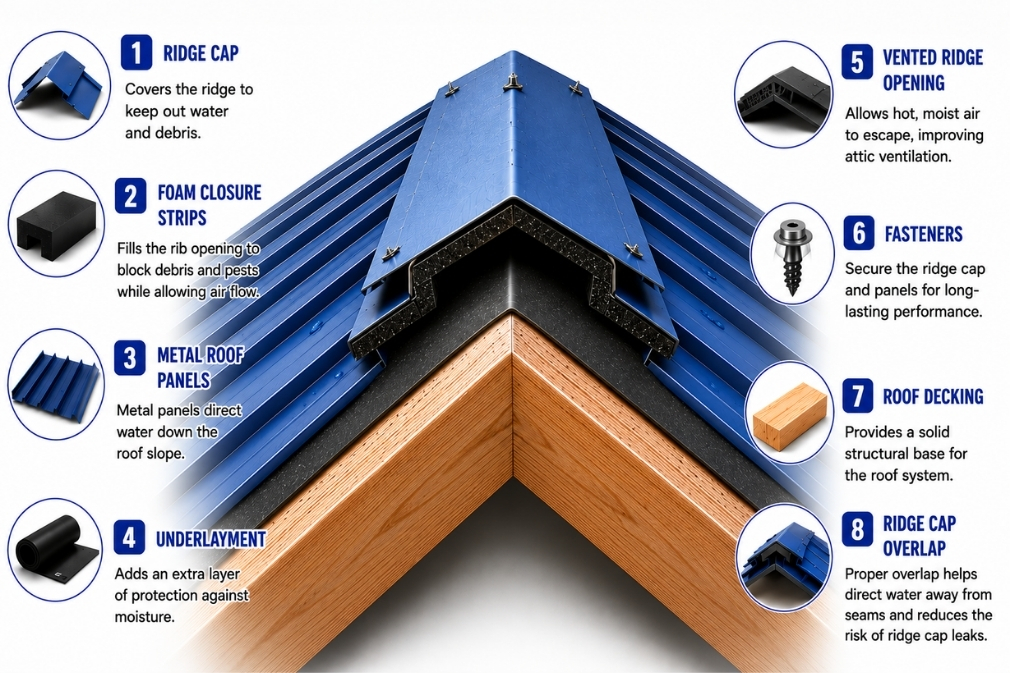
The diagram illustrates how the ridge cap, foam closure strips, fasteners, underlayment, and vented ridge opening work together to help protect the roof peak from weather exposure while maintaining proper airflow. Understanding how these components fit together can make it easier to identify installation issues, ventilation problems, and potential leak points before they become larger roofing repairs.
Components of a Metal Roof Ridge Cap System
A metal roof ridge cap system consists of several components that work together to protect the roof peak from water intrusion while supporting long-term performance and ventilation.
- Ridge Cap
The ridge cap is the metal trim installed over the roof peak where two roof slopes meet. It serves as the primary weather barrier at the ridge line.
- Foam Closure Strips
Foam closure strips fill gaps between the ridge cap and roof panels. They help block wind-driven rain, insects, dust, and debris while maintaining a secure fit.
- Fasteners
Roofing screws secure the ridge cap to the roofing system. Proper fastener placement is just one part of a successful metal roof installation, helping improve weather resistance and reduce the risk of leaks.
- Sealant
Some ridge cap systems use sealants to help protect overlaps and exposed areas from water intrusion. Sealants should be compatible with the roofing materials being used.
- Vent Material (Vented Systems)
Vented ridge cap systems use specialized vent material or vented closure strips to allow airflow while helping prevent weather and debris from entering the roof assembly.
These components work together to create a durable ridge cap system that helps protect against leaks, supports ventilation, and improves the overall performance of a metal roof.
Why Ridge Caps Matter in Metal Roofing Systems
A metal roof is only as effective as its weakest detail. Even properly installed panels can experience problems if the ridge area is not protected correctly.
Ridge caps help create a weather-resistant transition at the highest point of the roof system. They also work together with underlayment, flashing, ventilation components, and the roof’s moisture protection system to reduce moisture-related issues.
Without proper ridge cap installation, homeowners may experience:
- Water leaks during heavy rain
- Wind-driven moisture intrusion
- Condensation problems
- Premature fastener wear
- Increased attic heat buildup
- Reduced roof lifespan
What Happens if a Ridge Cap Is Installed Incorrectly?
Installation mistakes often cause problems long before the metal panels fail.
Common consequences include:
- Leaks around the ridge line
- Wind-driven rain entering beneath the ridge cap
- Loose ridge sections after storms
- Rust around exposed fasteners
- Reduced ventilation performance
- Moisture buildup inside the attic
Types of Metal Roof Ridge Caps
Not all ridge caps are designed the same way. The best option depends on the roofing profile, ventilation requirements, and roof design.
Standard Ridge Cap
- A standard ridge cap is commonly used on exposed-fastener metal roofing systems.
- It provides basic protection against weather while covering the ridge line where roof panels meet.
Vented Ridge Cap
- A vented ridge cap allows warm air to escape from the attic while still protecting the roof peak.
- This option is commonly used in hot climates where attic ventilation is important for reducing heat buildup.
Z-Bar Ridge Systems
- Z-bar systems create a raised attachment point beneath the ridge cap.
- They are often used on standing seam roofs to provide a cleaner appearance and additional support.
Foam Closure Ridge Systems
- Foam closures help seal gaps created by panel profiles.
- They reduce the risk of wind-driven rain, insects, debris, and dust entering beneath the ridge cap.
Standing Seam Ridge Cap
- Standing seam ridge caps are designed specifically for concealed-fastener roofing systems used on many modern standing seam metal roofs.
- They often provide a cleaner appearance and improved weather resistance. Because standing seam systems use concealed fasteners, the ridge cap detail differs from exposed-fastener roofing systems.
Corrugated Roof Ridge Cap
- Corrugated metal roofing requires ridge caps shaped to match the panel profile.
- Using the wrong profile can leave gaps that increase the risk of leaks.
Vented vs Non-Vented Ridge Caps
One of the most common questions homeowners ask is whether a metal roof needs a vented ridge cap.
The answer depends on the roof’s ventilation design.
| Feature | Vented Ridge Cap | Non-Vented Ridge Cap |
| Airflow | Allows ventilation | No airflow |
| Moisture Control | Better attic moisture management | Limited ventilation benefit |
| Energy Efficiency | Helps reduce attic heat | No ventilation benefit |
| Installation Complexity | Slightly higher | Simpler |
| Best For | Ventilated attic systems | Non-vented roof assemblies |
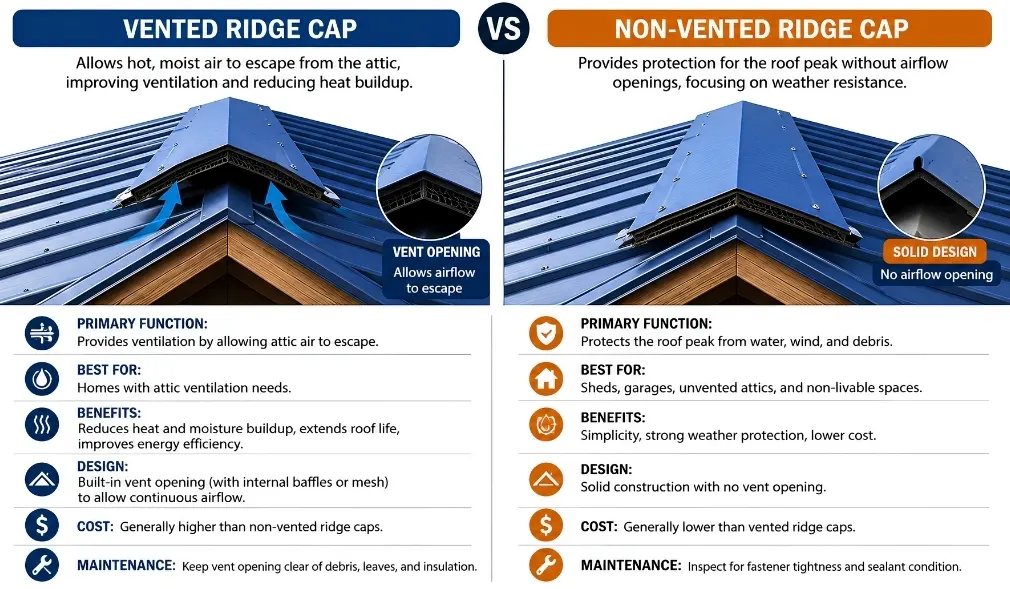
Do Metal Roofs Need a Vented Ridge Cap?
Not every metal roof requires one, but vented ridge caps are often beneficial for homes with attic ventilation systems.
Proper airflow can help:
- Reduce heat buildup
- Limit condensation
- Improve energy efficiency
- Extend roof system performance
In Texas, attic ventilation becomes especially important during long periods of summer heat. In San Antonio and other parts of South Texas, attic temperatures can become extremely high during the summer months, making proper ridge ventilation an important part of overall roof performance. Some roofing systems may also use an air gap under a metal roof to help improve airflow and manage moisture beneath the panels.
Metal Roof Ridge Cap Installation Process
Proper installation is about more than attaching a piece of metal to the roof peak. Each step affects weather resistance and long-term performance.
Ridge Cap Installation Checklist
- Measure the ridge line
- Verify panel alignment
- Install closure strips
- Position the ridge cap
- Overlap sections correctly
- Fasten according to the manufacturer’s specifications
- Check ventilation openings
Step 1: Measure the Ridge Line
- Accurate measurements help determine how many ridge cap sections are required and where overlaps will occur.
Step 2: Verify Panel Alignment
- Before installing the ridge cap, roof panels should be straight and evenly aligned, since proper panel alignment during metal roof installation affects how well the ridge cap fits at the roof peak.
- Misaligned panels often create gaps that are difficult to seal later.
Closure strips help seal panel openings beneath the ridge cap.
One of the most common ridge cap issues seen during roof inspections is missing or deteriorated closure strips. Although they are small components, they help block wind-driven rain, dust, insects, and debris from entering beneath the ridge cap.
Without them, wind-driven rain and debris may enter the roof system.
Step 4: Position the Ridge Cap
- The ridge cap should sit evenly across both roof slopes.
- Consistent placement improves appearance and weather protection.
Step 5: Overlap Ridge Sections Properly
- Each section should overlap correctly to help direct water away from seams.
- Improper overlap is a common cause of ridge cap leaks.
Step 6: Secure Fasteners
- Fasteners should be installed according to the roofing manufacturer’s requirements.
- Overdriven or misplaced screws can create future leak points.
Step 7: Verify Ventilation Gaps
- For vented systems, airflow pathways must remain open.
- Blocking ventilation can trap heat and moisture beneath the roof.
How Much Should a Metal Roof Ridge Cap Overlap?
Most metal roof ridge cap sections overlap by 6 to 12 inches, although the exact requirement depends on the roofing manufacturer, panel profile, and local weather conditions. Proper overlap helps direct water away from seams, improves wind resistance, and reduces the risk of leaks around the ridge line. Insufficient overlap can allow wind-driven rain to enter beneath the ridge cap, while excessive overlap may affect alignment and appearance. Always follow the installation specifications provided for the metal roofing system being installed.
Common Metal Roof Ridge Cap Mistakes
Many ridge cap failures are caused by installation details rather than material defects.
| Mistake | Potential Result |
| Incorrect overlap | Water intrusion |
| Missing closure strips | Wind-driven rain entry |
| Wrong fastener placement | Leaks around screws |
| Overtightened fasteners | Damaged washers |
| Blocked ventilation paths | Condensation buildup |
| Poor ridge alignment | Uneven weather protection |
These issues may not cause immediate leaks, but they often shorten the life of the roofing system.
For broader installation-related issues, see our guide on common metal roof installation mistakes.
Why Metal Roof Ridge Caps Leak
When homeowners notice water entering near the roof peak, the ridge cap is often one of the first areas that should be inspected, although some leaks may originate from other areas of the roof system.
In many cases, the leak is not caused by the ridge cap itself but by aging sealants, loose fasteners, or small gaps that develop around ridge cap connections over time.
Common causes include:
- Aging Sealants
Sealants naturally deteriorate over time due to UV exposure and weather.
- Missing Closure Strips
Without closures, water can be pushed beneath the ridge cap during storms.
- Improper Fastener Installation
Loose or improperly placed screws can create leak pathways.
- Storm Damage
Strong winds, hail, and severe weather can lift ridge cap sections, damage fasteners, or compromise seals around the ridge line.
- Ridge Separation
Temperature fluctuations can cause movement that eventually opens gaps at joints.
How to Seal a Metal Roof Ridge Cap
Proper sealing usually involves correctly installed closure strips, appropriate fastener placement, and compatible sealants at overlaps when required by the roofing manufacturer. Improper sealing can allow wind-driven rain and moisture to enter beneath the ridge cap.
Common steps that help improve ridge cap sealing include:
- Replacing damaged or missing foam closure strips
- Inspecting and tightening loose fasteners
- Applying compatible sealants at overlaps when specified by the manufacturer
- Repairing separated ridge cap sections
- Keeping vent openings clear in vented systems
If leaks continue after minor repairs, the ridge cap may require professional inspection to identify underlying installation issues.
Ridge Cap Maintenance Tips
Routine maintenance can help identify small issues before they become major repairs.
A simple maintenance checklist includes:
- Inspect ridge caps annually
- Check fasteners after severe storms
- Look for loose or damaged closure strips
- Remove debris buildup
- Examine sealants for cracking
- Watch for signs of rust near fasteners
Regular inspections are especially important in areas that experience high winds, hail, or heavy rainfall. In Texas, seasonal storms and temperature fluctuations can place additional stress on ridge cap components over time.
Ridge Cap vs Ridge Vent
Although the terms are sometimes used interchangeably, they serve different functions.
| Feature | Ridge Cap | Ridge Vent |
| Protects Roof Peak | Yes | Partially |
| Allows Airflow | No | Yes |
| Prevents Water Entry | Yes | Yes |
| Improves Ventilation | No | Yes |
| Installed at Ridge | Yes | Yes |
A vented ridge cap combines both weather protection and ventilation benefits.
Conclusion
A metal roof ridge cap plays an important role in protecting the roof peak from water intrusion, wind-driven rain, and moisture-related problems. Proper installation, ventilation, closure strips, and fastener placement all contribute to long-term roof performance.
Many ridge cap issues start as small maintenance or installation problems and become larger repairs over time. Understanding how ridge caps work can help homeowners identify potential issues early and keep their metal roofing system performing as intended.
Need Help With a Metal Roof Ridge Cap Issue?
If you’ve noticed leaks near the ridge line, loose ridge cap sections, or signs of attic moisture, a professional roof inspection can help identify the cause before more extensive repairs are needed.
If you’re unsure whether your ridge cap needs repair or replacement, an inspection can uncover hidden issues before they develop into more costly roof damage.
Mangold Roofing provides metal roof inspections, repairs, and replacement services throughout San Antonio and the surrounding areas.
FAQs
What is a ridge cap on a metal roof?
A ridge cap is the metal trim installed along the roof peak where two roof slopes meet. It helps prevent water intrusion, protects the ridge from weather exposure, and may support ventilation when used with a vented ridge system.
Does a metal roof ridge cap need ventilation?
Not always. However, vented ridge caps are often recommended when attic ventilation is part of the roof design.
How much should the metal ridge cap overlap?
Overlap requirements vary by manufacturer and roofing profile. Always follow the installation specifications for the specific roofing system.
What causes ridge cap leaks?
Common causes include missing closure strips, aging sealants, improper fastener placement, storm damage, and incorrect overlap.
Are foam closures necessary under a ridge cap?
In many exposed-fastener metal roofing systems, foam closures help block wind-driven rain, insects, and debris from entering beneath the ridge cap.
Can ridge caps be installed over existing roofing?
In some cases, yes. However, installation depends on the roof design, condition of existing materials, and manufacturer recommendations.
What is the difference between a vented and non-vented metal roof ridge cap?
A vented ridge cap allows attic airflow and moisture to escape, while a non-vented ridge cap primarily provides weather protection. The right choice depends on the roof’s ventilation design and local climate conditions.
Can a metal roof ridge cap be replaced without replacing the entire roof?
Yes. In many cases, damaged ridge caps can be repaired or replaced independently if the surrounding roof panels remain in good condition.