Many homeowners assume a metal roof doesn’t need additional ventilation because metal reflects heat. In reality, proper attic ventilation helps remove excess heat and moisture that can build up beneath the roof, especially during long summers and humid weather.
A metal roof ridge vent is an exhaust vent installed along the highest point of the roof. Working together with intake vents, such as soffit vents, it allows warm, moisture-laden air to escape from the attic. This continuous airflow helps reduce condensation, improve energy efficiency, and protect the roof system over time.
Whether you’re planning a new metal roof or wondering if your existing roof has enough ventilation, understanding how ridge vents work can help you prevent moisture problems before they become costly repairs.
Quick Answer: A metal roof ridge vent is an exhaust vent installed along the roof peak that allows warm, moisture-filled air to escape from the attic. It works with soffit intake vents to create continuous airflow, reducing heat buildup, condensation, and long-term moisture damage beneath metal roofing panels.
What Is a Metal Roof Ridge Vent?
A metal roof ridge vent is a ventilation component installed beneath or within the ridge cap at the peak of the roof. Unlike a standard ridge cap that primarily protects the roof peak from weather, a ridge vent is designed to allow air to flow out of the attic while still keeping rain, debris, and insects out.
When combined with intake ventilation near the eaves, a ridge vent creates continuous airflow through the attic.
Its primary functions include:
- Removing hot attic air
- Releasing trapped moisture
- Improving attic ventilation
- Helping regulate indoor temperatures
- Reducing the likelihood of condensation beneath the roof
Many homeowners confuse a ridge vent with a ridge cap because both are installed at the roof peak. While they work together, they serve different purposes.
| Component | Primary Purpose |
| Ridge Cap | Covers and protects the roof peak from weather |
| Ridge Vent | Allows warm, moist attic air to escape |
| Vented Ridge Cap | Combines weather protection with attic ventilation |
How Does a Metal Roof Ridge Vent Work?
A metal roof ridge vent works through natural convection.
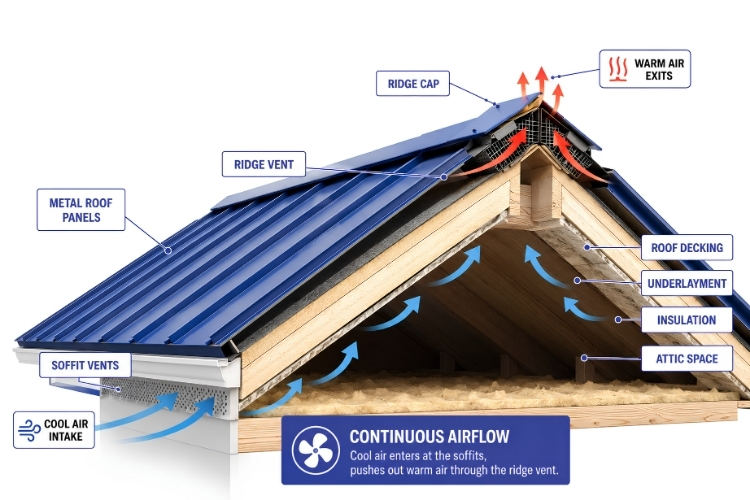
Heat naturally rises inside the attic and collects near the roof peak. The ridge vent provides an exit point for that warm, humid air. As hot air escapes through the ridge, cooler outside air is drawn in through soffit or intake vents near the eaves.
This continuous cycle happens without electricity or moving parts.
A ridge vent alone cannot create airflow if there are no intake vents below.
Benefits of a Metal Roof Ridge Vent
- Cooler attic temperatures during summer months
- Reduced condensation beneath metal roofing panels
- Lower cooling costs by reducing heat buildup
- Longer roof and insulation lifespan
- Reduced risk of mold and mildew growth
- No electricity or moving parts required
- Works continuously without maintenance cycles
Why Is a Ridge Vent Important on a Metal Roof?
Heat and moisture naturally rise toward the highest point of the roof. Without an escape path, they remain trapped inside the attic.
Over time, this can contribute to:
- Higher attic temperatures
- Moisture accumulation
- Condensation beneath roofing panels
- Mold growth
- Reduced insulation performance
- Increased cooling costs
A properly functioning ridge vent allows this warm air to exit while cooler air enters through intake vents.
In San Antonio and throughout South Texas, attic temperatures can become extremely high during summer. Proper ridge ventilation helps release trapped heat while improving overall roof performance.
Do Metal Roofs Need Ridge Vents?
Most metal roofs with ventilated attics benefit from a ridge vent, but not every metal roof requires one. The answer depends on your attic type, insulation, and overall ventilation design. A ridge vent works because warm air naturally rises.
As warm attic air moves upward, it exits through the ridge vent while fresh outside air enters through intake vents located lower on the roof.
This natural airflow creates continuous attic ventilation without requiring electricity or moving parts.
The basic airflow process looks like this:
- Cool air enters through soffit or intake vents.
- Air moves upward through the attic.
- Warm, humid air rises naturally.
- The ridge vent allows that air to escape.
- Continuous airflow helps regulate attic conditions, and some roofing systems also include an air gap beneath the metal panels to further improve airflow and moisture control.
Without adequate intake ventilation, even a properly installed ridge vent cannot perform efficiently.
What Happens Without a Ridge Vent?
Without adequate exhaust ventilation, heat and moisture can become trapped inside the attic. Over time, this may lead to:
- Higher attic temperatures
- Damp insulation
- Mold and mildew growth
- Increased cooling costs
- Premature deterioration of roofing components
In many roof assemblies, a moisture barrier beneath the roofing panels also helps reduce the risk of condensation reaching the roof decking.
Do All Metal Roofs Need a Ridge Vent?
Most homes with ventilated attics benefit from a ridge vent, but not every metal roof requires one. Whether a ridge vent is appropriate depends on the roof design, attic configuration, insulation, climate, and the overall ventilation system. A balanced combination of intake and exhaust ventilation is more important than simply adding a ridge vent.
Homes with ventilated attics often benefit from ridge vents because they help maintain balanced airflow.
Some roofing systems may instead use:
- Gable vents
- Roof louvers
- Mechanical attic fans
- Alternative exhaust ventilation systems
A roofing professional can determine which ventilation method is appropriate for your specific roof assembly.
Ridge Vent Options for Different Metal Roofing Systems
Not every metal roof uses the same style of ridge vent.
The correct option depends on the roofing profile, ventilation requirements, and roof design.
External Baffled Ridge Vent
This design uses a raised profile that helps improve airflow while reducing the risk of wind-driven rain entering the attic.
It is commonly used on residential roofing systems.
Low-Profile Ridge Vent
A low-profile ridge vent blends more closely with the roofline while still providing continuous ventilation.
Many homeowners choose this option for aesthetic reasons.
Standing Seam Ridge Vent
Standing seam roofing systems use ridge vents specifically designed to work with concealed-fastener panels.
These systems maintain the clean appearance of standing seam roofs while supporting proper ventilation.
The ridge vent design should also match the profile and attachment method of the standing seam roofing system.
Corrugated Metal Roof Ridge Vent
Corrugated panels require ridge vents and closures that match the shape of the panel profile.
Using mismatched components can leave gaps that allow wind-driven rain or insects to enter beneath the ridge cap.
How to Choose the Best Ridge Vent for a Metal Roof
The best ridge vent for a metal roof depends on the panel profile, roof pitch, and climate.
Key factors to consider:
- Panel compatibility: the vent must match your specific panel profile
- Foam closure fit: mismatched foam closures leave gaps that allow wind-driven rain and insects in
- Baffle design: baffled ridge vents reduce wind-driven rain entry in high-precipitation areas
- Continuous vs static: continuous ridge vents provide more consistent airflow than individual static vents
Common Metal Roof Ridge Vent Problems
A ridge vent is designed to improve ventilation, but problems can occur if it is installed incorrectly or not maintained.
Some of the most common issues include:
Blocked Airflow
Insulation or debris can restrict airflow through the ventilation pathway, reducing the vent’s effectiveness.
Missing Closure Strips
One issue frequently found on older exposed-fastener roofs is missing or deteriorated closure strips. These small components help block wind-driven rain, dust, and insects while allowing the ventilation system to function properly.
Incorrect Fastener Placement
Fasteners driven in the wrong location can create unnecessary leak points around the ridge area.
Storm Damage
High winds may loosen ridge caps or damage vent components, reducing their ability to keep out water while maintaining airflow.
Poor Installation
Improper alignment or incorrect overlap between ridge sections can affect both weather protection and ventilation performance.
Can a Metal Roof Ridge Vent Leak?
A properly installed ridge vent should not leak, but water intrusion can occur if closure strips are missing, fasteners are installed incorrectly, or the metal roof ridge cap is not installed or sealed properly. In many cases, the leak is caused by installation details rather than the ridge vent itself.
If water is entering near the roof peak, inspecting the ridge cap, fasteners, and surrounding flashing can help identify the source before assuming the ventilation system has failed.
Signs Your Metal Roof May Need Better Ridge Ventilation
Ventilation problems often develop gradually, making them easy to overlook until more noticeable issues appear.
Common signs include:
- Extremely hot attic temperatures
- Condensation beneath roof panels
- Mold or mildew odors
- Damp insulation
- Rust forming on interior metal components
- Increased cooling bills
- Visible moisture on roof decking
These symptoms don’t always mean the ridge vent is failing, but they often indicate that the attic ventilation system should be inspected.
Ridge Vent vs Ridge Cap
Although they are installed in the same area of the roof, a ridge vent and a ridge cap perform different functions. A ridge cap protects the roof peak from weather exposure, while a ridge vent allows warm, moisture-laden air to escape from the attic. On many modern metal roofing systems, both components work together to improve roof performance.
| Feature | Ridge Vent | Ridge Cap |
| Primary Purpose | Provides attic ventilation | Protects the roof peak |
| Allows Airflow | Yes | No (unless vented) |
| Helps Control Moisture | Yes | Limited |
| Prevents Water Entry | Yes (when installed properly) | Yes |
| Installed at Roof Peak | Yes | Yes |
A vented ridge cap combines both functions by covering the ridge while allowing continuous attic ventilation.
Ridge Vent vs Other Metal Roof Ventilation Options
A ridge vent is one of several ways to ventilate a metal roof. The best choice depends on the roof design, attic configuration, and airflow requirements.
| Ventilation Option | Best Use | Main Benefit |
| Ridge Vent | Most residential attics | Continuous exhaust ventilation |
| Soffit Vents | Intake ventilation | Supplies fresh outside air |
| Gable Vents | Older homes | Improves cross ventilation |
| Roof Vents | Smaller roof sections | Localized exhaust airflow |
| Powered Attic Fans | Specific ventilation needs | Active air movement |
For most residential metal roofs, ridge vents paired with soffit vents create the most balanced ventilation system.
Metal Roof Ridge Vent Installation Basics
Installing a ridge vent involves more than simply adding a vent beneath the ridge cap. Proper alignment, airflow, and weather protection all affect long-term performance.
The typical installation process includes:
Step 1: Prepare the Ridge Opening
A ventilation slot is cut along the roof peak according to the roofing manufacturer’s specifications.
Step 2: Verify Intake Ventilation
Before installing the ridge vent, adequate intake ventilation should already be present near the roof eaves. One of the most common ventilation issues occurs when a ridge vent is installed without enough intake ventilation at the soffits. Without balanced airflow, even a properly installed ridge vent cannot perform as intended.
Step 3: Position the Ridge Vent
The ridge vent is centered over the opening to provide continuous airflow across the roof peak.
Step 4: Install the Ridge Cap
The ridge cap is installed over the vent to protect it from rain while allowing air to escape.
Step 5: Secure Fasteners
Fasteners should be installed according to the manufacturer’s recommendations to avoid damaging the vent or creating future leak points.
Step 6: Inspect Airflow
After installation, the ventilation pathway should remain unobstructed to allow continuous attic airflow.
Metal Roof Ridge Vent Maintenance Tips
Like any roofing component, ridge vents benefit from periodic inspections.
A simple maintenance routine can help identify minor issues before they affect roof performance.
Maintenance recommendations include:
- Inspect the ridge after major storms.
- Remove leaves or debris that may block airflow.
- Check ridge caps for loose fasteners.
- Look for damaged closure strips.
- Inspect sealants if applicable.
- Watch for signs of moisture inside the attic.
- Schedule professional roof inspections periodically.
Routine maintenance helps keep the ventilation system working efficiently throughout the life of the roof.
Can You Add a Ridge Vent to an Existing Metal Roof?
Yes, in many cases a ridge vent can be added to an existing metal roof, but it depends on the roof design, panel type, and current ventilation setup.
The process involves cutting a ventilation slot along the ridge, which requires working on the completed metal panel surface. This is more complex than installing during initial construction.
Key considerations:
- Panel profile compatibility with available ridge vent products
- Whether adequate intake ventilation already exists at the soffits
- Roof age and current condition of the ridge cap and closures
A professional assessment is recommended before retrofitting a ridge vent on an existing metal roof.
Common Ridge Vent Installation Mistakes
Many ridge vent problems result from installation errors rather than product defects.
| Mistake | Possible Result |
| Insufficient intake ventilation | Reduced airflow |
| Blocked ventilation path | Heat and moisture buildup |
| Improper ridge opening | Restricted ventilation |
| Incorrect fastener placement | Water intrusion |
| Poor ridge cap alignment | Weather-related leaks |
| Missing closure components | Wind-driven rain entry |
Many of these issues develop during the installation process rather than from product failure. While they may not cause immediate problems, they can reduce ventilation performance and contribute to moisture-related damage over time.
Metal Roof Ridge Vent Installation in San Antonio
In San Antonio and throughout South Texas, attic temperatures during summer regularly exceed 140 degrees Fahrenheit.
Without proper ridge ventilation, that heat stays trapped inside the attic, increasing cooling costs and accelerating wear on insulation and roofing components.
A properly installed ridge vent paired with soffit intake vents helps release trapped heat continuously, improving energy efficiency during the hottest months.
Mangold Roofing installs and inspects metal roof ridge vents throughout San Antonio and the surrounding areas, helping homeowners manage attic heat before it becomes a larger problem.
Conclusion
A metal roof ridge vent plays an important role in maintaining proper attic airflow, reducing moisture buildup, and improving the overall performance of a metal roofing system. When combined with adequate intake ventilation, it helps regulate attic temperatures while reducing the risk of condensation and long-term roof damage.
Small ventilation issues often go unnoticed until they begin affecting other parts of the roof system. Regular inspections and timely repairs can help identify problems before they become more costly to address.
Need Help With a Metal Roof Ridge Vent?
If you’ve noticed excessive attic heat, condensation, moisture near the ridge line, or signs that your roof ventilation isn’t performing properly, a professional inspection can help determine the underlying cause.
Mangold Roofing provides metal roof inspections, repairs, and replacement services throughout San Antonio and the surrounding areas, helping homeowners identify ventilation issues before they lead to more extensive roof damage.
Frequently Asked Questions
1. How does a metal roof ridge vent work?
A ridge vent works through natural convection. Warm air rises and exits through the ridge while cooler outside air enters through soffit vents below, creating continuous attic airflow without electricity or moving parts.
2. Will a ridge vent stop condensation?
A ridge vent helps reduce condensation by improving attic airflow. However, proper intake ventilation, insulation, and moisture control are also necessary for the best results.
3. How often should a ridge vent be inspected?
Inspect ridge vents at least once a year and within a week after any major storm or high wind event to ensure airflow remains unobstructed and all components remain secure.
4. Can a metal roof be installed without a ridge vent?
Yes. Some roofs use gable vents, roof vents, or other ventilation methods instead. The best solution depends on the home’s overall ventilation design.
5. Is a ridge vent better than individual roof vents?
For most residential metal roofs, a continuous ridge vent performs better because it provides consistent airflow across the entire attic rather than ventilating only one section at a time.
6. How long do ridge vents last?
Metal ridge vents typically last 20 to 30 years. Foam closure strips may need replacement sooner, usually every 10 to 15 years depending on climate and UV exposure.
7. What causes a ridge vent to stop working?
The most common causes are blocked airflow from insulation or debris, missing or deteriorated closure strips, insufficient intake ventilation at the soffits, and storm damage to the ridge cap or vent components.
8. Does a ridge vent help with energy bills?
Yes. By releasing trapped attic heat, a properly functioning ridge vent reduces the workload on your cooling system, which can lower energy costs during hot months, especially in climates like South Texas.