Many homeowners assume a metal roof does not need ventilation because metal reflects heat. While metal roofing can help reduce heat absorption, proper ventilation still plays an important role in controlling moisture, reducing attic temperatures, and protecting the roof system over time.
Without adequate airflow, heat and moisture can become trapped beneath the roof, potentially leading to condensation, mold growth, insulation problems, and premature deterioration of roofing components.
Whether you are planning a new metal roof installation or evaluating an existing system, understanding how ventilation works can help you avoid costly problems in the future.
Quick Answer: Do Metal Roofs Need Ventilation?
Yes, most metal roofing systems benefit from proper ventilation. Ventilation helps remove heat and moisture from the attic or roof assembly, reducing the risk of condensation, mold growth, insulation damage, and premature roof deterioration. The exact ventilation requirements depend on the roof design, attic configuration, insulation, climate, installation method, and even the roof pitch.
Why Ventilation Matters Under a Metal Roof
- Ventilation is often associated with temperature control, but its biggest benefit is moisture management.
- Proper roof ventilation helps create airflow that removes warm, humid air before it can become trapped beneath the roofing system.
Helps Prevent Condensation
- Condensation occurs when warm, moisture-filled air comes into contact with cooler surfaces.
- Because metal can cool quickly during temperature changes, moisture may form underneath the roof if airflow is inadequate.
Controls Attic Temperatures
- Ventilation helps remove excess heat from the attic, especially during hot summer months.
- This can improve indoor comfort and reduce strain on cooling systems.
Protects Roofing Materials
Moisture trapped beneath a roof can affect more than just the metal panels.
Ventilation helps protect:
- Roof decking
- Underlayment
- Insulation
- Fasteners
- Structural framing
Improves Energy Efficiency
- When excessive heat remains trapped in the attic, cooling systems often work harder to maintain indoor temperatures.
- Proper ventilation can help improve overall energy performance.
What Happens If a Metal Roof Is Not Properly Ventilated?
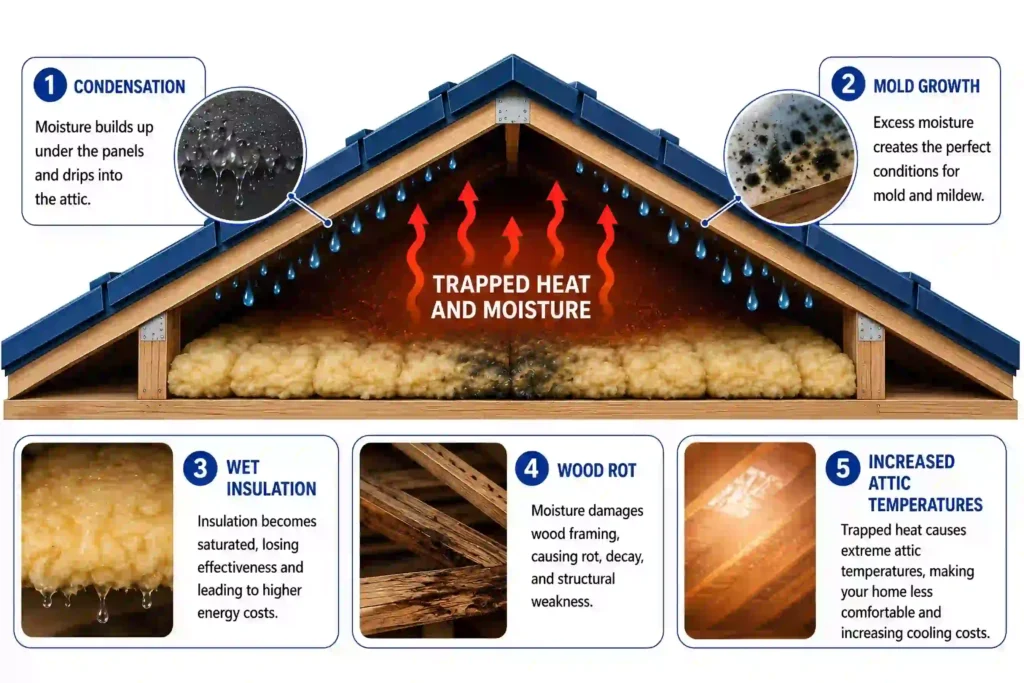
Poor ventilation can create several long-term problems that may not be immediately visible.
| Potential Issue | Why It Happens |
| Condensation | Moisture becomes trapped beneath the roof |
| Mold Growth | Persistent damp conditions encourage mold |
| Wood Rot | Moisture reaches roof decking and framing |
| Wet Insulation | Insulation loses effectiveness when damp |
| Higher Cooling Costs | Heat remains trapped in the attic |
| Premature Roof Deterioration | Moisture accelerates wear on roofing components |
Many homeowners first notice ventilation problems through unusually high attic temperatures, musty odors, or visible signs of moisture.
Do Metal Roofs Sweat?
One of the most common questions homeowners ask is whether metal roofs “sweat.”
In reality, metal does not sweat. What people are seeing is condensation.
Condensation forms when warm, humid air meets a cooler metal surface. As temperatures change, moisture can collect beneath the roofing panels.
This issue is more common when:
- Ventilation is inadequate
- Moisture levels are high
- Airflow is restricted
- Vapor control measures are missing
In many roof assemblies, a moisture barrier is also used to help prevent water vapor from reaching cooler metal surfaces where condensation can form.
Proper ventilation helps reduce the conditions that allow condensation to develop, but some roofing systems also use an air gap beneath the panels to improve airflow and moisture control.
When Does a Metal Roof Need Ventilation?
Not every roof is built the same way. Ventilation requirements often depend on the design of the roof assembly.
Metal Roof Installed Over an Attic
Most residential homes have attic spaces beneath the roof.
In these situations, ventilation helps remove heat and moisture that accumulate inside the attic.
Standing Seam Metal Roof Systems
Standing seam roofs often include concealed fasteners and specialized installation methods that differ from many exposed-fastener metal roofing systems.
While these systems offer excellent weather resistance, ventilation may still be important depending on the roof design.
A natural internal link can be added to your standing seam roofing guide here.
Metal Roof Installed Over Plywood Decking
Many residential metal roofs are installed over plywood or OSB decking, making the condition of the roof deck an important factor in long-term roof performance.
In these assemblies, proper moisture management becomes important for protecting the decking material over time.
Metal Roof Installed Over Battens or Furring Strips
Some systems use battens or furring strips that create an air space beneath the panels.
This design can improve airflow and help manage moisture.
How Are Metal Roofs Ventilated?
Most residential metal roofs rely on a combination of intake and exhaust ventilation.
The goal is to create balanced airflow that allows fresh air to enter while warm, moist air exits.
Common ventilation methods include:
- Soffit Vents
Installed beneath roof overhangs to provide intake airflow.
- Ridge Vents
Installed at the roof peak to allow warm air to escape.
- Gable Vents
Located on gable walls to assist with attic airflow.
- Roof Vents
Installed through the roof surface to improve ventilation.
Rather than focusing on individual vent products, homeowners should understand that effective ventilation depends on the overall system working together.
Do Metal Roofs Need Ventilation in Texas?
In many parts of Texas, proper roof ventilation can have a significant impact on roof performance.
Summer temperatures often create extremely hot attic conditions.
In San Antonio and other areas of South Texas, attic temperatures can climb well above outdoor temperatures during prolonged heat waves.
Proper ventilation helps:
- Reduce attic heat buildup
- Improve indoor comfort
- Manage moisture levels
- Support energy efficiency
- Protect roofing materials
Ventilation becomes especially important when combined with insulation and moisture-control components.
Signs Your Metal Roof May Have a Ventilation Problem
Ventilation issues often develop gradually.
Common warning signs include:
- Excessive attic heat
- Visible condensation
- Musty odors
- Mold growth
- Rust on metal components
- Damp insulation
- Higher energy bills
- Moisture stains on decking
If these conditions are present, it may be worth scheduling a professional roof inspection to identify the cause.
When to Have a Professional Roof Inspection
Not every ventilation issue is obvious from the ground.
A professional inspection can help determine whether problems are related to:
- Ventilation design
- Moisture buildup
- Insulation issues
- Roof assembly configuration
- Existing roof damage
Early identification often helps prevent more expensive repairs later.
Conclusion
Most metal roofs benefit from proper ventilation, even though metal roofing reflects a portion of the sun’s heat.
Ventilation helps control moisture, reduce attic temperatures, improve energy efficiency, and protect the roofing system from long-term damage. While ventilation requirements vary depending on roof design and installation method, adequate airflow remains one of the most important factors in maintaining roof performance and preventing many common metal roofing problems.
For homeowners in hot climates such as San Antonio and throughout Texas, proper ventilation can be just as important as the roofing material itself.
FAQs
Do all metal roofs need ventilation?
Not all metal roofs require the same ventilation setup, but most residential metal roofing systems benefit from adequate airflow to control heat and moisture.
Does a standing seam metal roof need ventilation?
Many standing seam roofs still benefit from ventilation, especially when installed over attic spaces or roof decking.
Can a metal roof be installed without ridge vents?
Yes. Some roof designs use alternative ventilation methods such as gable vents, roof vents, or other exhaust systems.
How are metal roofs vented?
Most systems use a combination of intake vents, such as soffit vents, and exhaust vents, such as ridge vents, to create balanced airflow.
Will ventilation stop condensation?
Proper ventilation can significantly reduce condensation by removing moisture-laden air before it accumulates beneath the roof.
What is the best roof vent for a metal roof?
The best option depends on the roof design, attic layout, climate, and overall ventilation strategy. Ridge and soffit vent combinations are commonly used in residential applications.