Stand outside in Texas during July and touch a metal mailbox. It gets hot fast. So it’s easy to assume a metal roof turns your house into an oven too. Surprisingly, that’s not how it works.
Yes, a metal roof can reach surface temperatures between 140°F and 190°F on a hot Texas afternoon. However, a hot roof doesn’t automatically mean a hotter house. Modern metal roofing systems are designed to reflect a significant portion of the sun’s radiant energy, and when paired with proper insulation and attic ventilation, they can help keep your attic and living spaces cooler than many traditional roofing materials.
The amount of heat entering your home depends on factors such as roof color, reflective coatings, ventilation, insulation, and the overall roofing system. Understanding how these elements work together can help you choose a roof that performs well in the Texas climate while improving comfort and energy efficiency.
How Hot Does a Metal Roof Actually Get?
Think about a pickup truck parked in the sun. By mid-afternoon, the hood is almost too hot to touch. A metal roof behaves much the same way. The surface heats up quickly under direct sunlight, but it also cools down faster once the sun begins to set.
Roof Color
Color has one of the biggest impacts on roof temperature.
- Dark colors absorb more solar heat.
- Light-colored roofs reflect more sunlight.
- Cool roof finishes further reduce heat absorption.
For example, a black metal roof exposed to full Texas sun will generally become hotter than a light gray or white roof with reflective coatings.
Roof Finish and Coatings
Modern metal roofing often includes reflective paint systems that reduce heat absorption.
High-performance finishes such as PVDF coatings are designed to reflect more solar radiation, helping lower the roof’s surface temperature and reducing the amount of heat transferred into the attic.
Weather Conditions
Several environmental factors also affect roof temperature, including:
- Air temperature
- Direct sunlight
- Cloud cover
- Wind speed
- Humidity
- Time of day
Because these conditions constantly change, no two roofs reach exactly the same temperature.
Does a Hot Metal Roof Make Your House Hotter?
Not necessarily.
One of the biggest misconceptions is that a hotter roof automatically means a hotter home. In reality, your indoor comfort depends on the entire roofing system rather than the roof surface alone.
A properly designed metal roofing system works with insulation, roof decking, ventilation, and other components to slow heat transfer into the home.
For example, imagine two homes with identical dark-colored metal roofs. One has good attic insulation and proper roof ventilation, while the other has poor airflow and inadequate insulation. Even though both roofs may reach similar surface temperatures, the first home is likely to stay significantly cooler inside.
This is why homeowners should focus on the overall roof assembly instead of surface temperature alone.
Why Metal Roofs Often Keep Homes Cooler Than Expected
Although metal roofs become hot in direct sunlight, they also offer characteristics that can improve energy efficiency.
They Reflect More Solar Energy
Many modern metal roofs are manufactured with reflective coatings that bounce a significant amount of solar radiation away from the roof instead of absorbing it.
They Release Heat Faster
Unlike some roofing materials that continue storing heat after sunset, metal cools relatively quickly once sunlight decreases.
Cool Roof Technology
Some metal roofing products are specifically designed as cool roofing systems.
These systems combine reflective coatings with specialized finishes that reduce heat absorption while maintaining the desired roof color.
What Affects the Temperature of a Metal Roof?
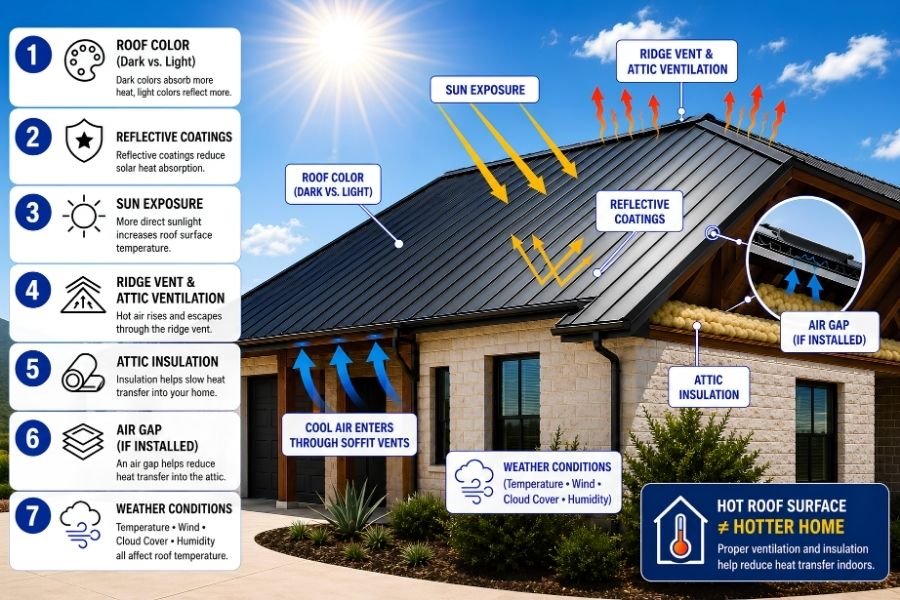
Several factors determine how much heat a metal roof absorbs and transfers.
- Roof Color
Light-colored roofs generally remain cooler because they reflect more sunlight.
Dark colors absorb more solar energy, increasing surface temperatures during the hottest parts of the day.
- Reflective Roof Coatings
Reflective coatings improve solar reflectance and reduce heat absorption.
Choosing a roofing system with a high-quality finish can make a noticeable difference in hot climates.
- Roof Ventilation
Proper roof ventilation plays an important role in reducing attic temperatures by allowing trapped hot air to escape. A ridge vent installed at the highest point of the roof works with intake vents to create continuous airflow through the attic.
Without adequate airflow, heat can build up beneath the roofing panels even if the roof itself reflects sunlight.
- Insulation
Insulation acts as a barrier between the attic and the living space below.
Good insulation helps prevent roof heat from moving into your home during the hottest months.
- Roof Design and Installation
Installation details also influence heat performance.
Some roofing systems include an air gap beneath the metal panels, helping improve airflow and reduce heat transfer.
Moisture barrier and proper installation practices also contribute to overall roof performance.
Is a Metal Roof Cooler Than Asphalt Shingles?
In many situations, yes.
Although both roofing materials become hot under direct sunlight, metal roofs generally reflect more solar energy and cool down faster after sunset.
| Feature | Metal Roof | Asphalt Shingles |
| Heat Reflection | Higher | Lower |
| Heat Absorption | Lower | Higher |
| Cooling Speed | Faster | Slower |
| Energy Efficiency | Better with reflective coatings | Depends on color and material |
| Performance in Texas Heat | Excellent with proper installation | Good, but generally absorbs more heat |
The difference becomes even more noticeable when reflective coatings and proper attic ventilation are included.
How to Keep a Metal Roof Cooler in Texas
While no roof remains cool all day in direct sunlight, several steps can improve thermal performance.
- Choose lighter roof colors when appropriate.
- Select reflective or cool roof coatings.
- Install proper attic ventilation.
- Ensure adequate insulation.
- Keep ventilation pathways clear.
- Schedule routine roof inspections to identify damaged components.
These improvements help reduce heat transfer into the home while improving overall roof performance.
Are Metal Roofs a Good Choice for Texas?
Yes. Metal roofing is well suited for the Texas climate when installed correctly.
Homes in San Antonio and throughout South Texas experience long periods of intense sunshine, high attic temperatures, strong UV exposure, and occasional hailstorms.
Popular options like standing seam metal roofs are designed to withstand these demanding conditions while offering benefits such as:
- Improved energy efficiency
- Better solar reflectance
- Long service life
- Resistance to severe weather
- Lower maintenance compared to many traditional roofing materials
Proper installation remains one of the most important factors in long-term performance.
Common Myths About Hot Metal Roofs
Myth: Metal roofs make homes hotter.
Fact: Indoor temperatures depend on insulation, ventilation, and the complete roofing system, not just the roof surface.
Myth: Metal roofs stay hot all night.
Fact: Metal releases stored heat relatively quickly after the sun goes down, often cooling faster than many traditional roofing materials.
Myth: All metal roofs reach the same temperature.
Fact: Roof color, reflective coatings, ventilation, weather conditions, and roof design all affect surface temperatures.
Conclusion
A metal roof can become extremely hot during a Texas summer, especially under direct afternoon sunlight. However, surface temperature alone does not determine how comfortable your home will be.
Several factors determine how much heat a metal roof absorbs and transfers.
- Roof Color
Light-colored roofs generally remain cooler because they reflect more sunlight.
Dark colors absorb more solar energy, increasing surface temperatures during the hottest parts of the day.
- Reflective Roof Coatings
Reflective coatings improve solar reflectance and reduce heat absorption.
Choosing a roofing system with a high-quality finish can make a noticeable difference in hot climates.
- Roof Ventilation
Proper roof ventilation plays an important role in reducing attic temperatures by allowing trapped hot air to escape. A ridge vent installed at the highest point of the roof works with intake vents to create continuous airflow through the attic.
Without adequate airflow, heat can build up beneath the roofing panels even if the roof itself reflects sunlight.
- Insulation
Insulation acts as a barrier between the attic and the living space below.
Good insulation helps prevent roof heat from moving into your home during the hottest months.
- Roof Design and Installation
Installation details also influence heat performance.
Some roofing systems include an air gap beneath the metal panels, helping improve airflow and reduce heat transfer.
Moisture barrier and proper installation practices also contribute to overall roof performance.
Is a Metal Roof Cooler Than Asphalt Shingles?
In many situations, yes.
Although both roofing materials become hot under direct sunlight, metal roofs generally reflect more solar energy and cool down faster after sunset.
| Feature | Metal Roof | Asphalt Shingles |
| Heat Reflection | Higher | Lower |
| Heat Absorption | Lower | Higher |
| Cooling Speed | Faster | Slower |
| Energy Efficiency | Better with reflective coatings | Depends on color and material |
| Performance in Texas Heat | Excellent with proper installation | Good, but generally absorbs more heat |
The difference becomes even more noticeable when reflective coatings and proper attic ventilation are included.
How to Keep a Metal Roof Cooler in Texas
While no roof remains cool all day in direct sunlight, several steps can improve thermal performance.
- Choose lighter roof colors when appropriate.
- Select reflective or cool roof coatings.
- Install proper attic ventilation.
- Ensure adequate insulation.
- Keep ventilation pathways clear.
- Schedule routine roof inspections to identify damaged components.
These improvements help reduce heat transfer into the home while improving overall roof performance.
Are Metal Roofs a Good Choice for Texas?
Yes. Metal roofing is well suited for the Texas climate when installed correctly.
Homes in San Antonio and throughout South Texas experience long periods of intense sunshine, high attic temperatures, strong UV exposure, and occasional hailstorms.
Popular options like standing seam metal roofs are designed to withstand these demanding conditions while offering benefits such as:
- Improved energy efficiency
- Better solar reflectance
- Long service life
- Resistance to severe weather
- Lower maintenance compared to many traditional roofing materials
Proper installation remains one of the most important factors in long-term performance.
Common Myths About Hot Metal Roofs
Myth: Metal roofs make homes hotter.
Fact: Indoor temperatures depend on insulation, ventilation, and the complete roofing system, not just the roof surface.
Myth: Metal roofs stay hot all night.
Fact: Metal releases stored heat relatively quickly after the sun goes down, often cooling faster than many traditional roofing materials.
Myth: All metal roofs reach the same temperature.
Fact: Roof color, reflective coatings, ventilation, weather conditions, and roof design all affect surface temperatures.
Conclusion
A metal roof can become extremely hot during a Texas summer, especially under direct afternoon sunlight. However, surface temperature alone does not determine how comfortable your home will be.
Reflective coatings, proper insulation, balanced attic ventilation, and quality installation all work together to reduce heat transfer and improve energy efficiency. When these components are part of a well-designed roofing system, a metal roof can be an excellent choice for homes throughout Texas.
Need Help Choosing the Right Metal Roof for Texas?
If you’re considering a metal roof or want to improve your home’s energy efficiency, a professional roof inspection can help determine which roofing system, color, and ventilation setup best suits your property.
Mangold Roofing has installed and repaired metal roofing systems throughout San Antonio and the surrounding areas for over 50 years, helping homeowners choose roofing solutions built for the Texas climate.
FAQs
How hot does a metal roof get in Texas?
A metal roof can reach surface temperatures between approximately 140°F and 190°F during hot Texas summer days, depending on roof color, coatings, weather conditions, and sun exposure.
Do metal roofs get hotter than asphalt shingles?
Not necessarily. While both roofing materials become hot in direct sunlight, metal roofs often reflect more solar energy and cool down faster after sunset.
Does a metal roof make your house hotter?
No. A properly installed metal roofing system with good insulation and attic ventilation can help reduce heat transfer into the home.
Is a metal roof a good choice for Texas?
Yes. Metal roofs perform well in Texas because they offer excellent durability, reflect solar heat, and withstand harsh weather conditions when properly installed.
What color metal roof stays the coolest?
Lighter colors generally stay cooler because they reflect more sunlight than darker colors.
How can I keep my metal roof cooler?
Choosing reflective coatings, maintaining proper attic ventilation, installing quality insulation, and selecting lighter roof colors can all help reduce heat buildup.
Do metal roofs reflect heat?
Yes. Modern metal roofing systems are designed to reflect a significant portion of solar radiation, especially when manufactured with reflective coatings.